

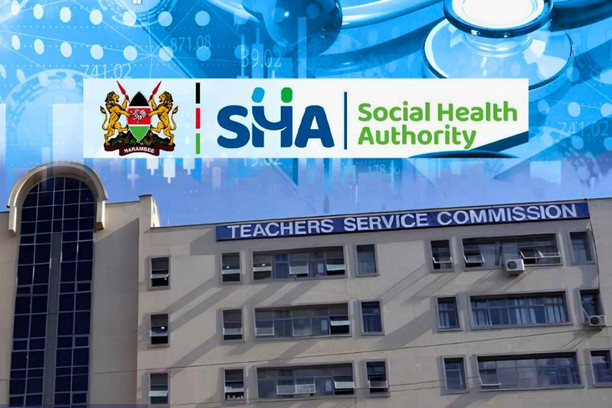
Every TSC-employed teacher in Kenya is now covered under the Mwalimu Comprehensive Medical Cover, run by the Social Health Authority (SHA) through the Public Officers Medical Scheme Fund (POMSF). It replaced the Minet Kenya scheme that teachers had used for roughly a decade, and it took effect on December 1, 2025.
Here’s what the cover includes, how much it pays by job group, who qualifies as a dependent, and what has changed since launch — including a new IVF benefit and an outpatient cap that was renegotiated just months into the rollout.
Quick summary: what the cover pays for
The Mwalimu Cover pays for inpatient treatment, outpatient care, maternity services, dental and optical care, chronic disease management (including dialysis), road and air evacuation, overseas treatment for specialised cases, and a last expense (funeral) benefit. From April 2026, it also covers IVF treatment for eligible members.
Coverage extends to the teacher (principal member), one legally declared spouse, and up to five dependent children. Benefit amounts differ by job group — more senior teachers get higher limits.
Why teachers moved from Minet to SHA
TSC had contracted Minet Kenya, through Medical Administrators (K) Limited (MAKL), to run teachers’ medical cover for years. That contract lapsed on November 30, 2025, and MAKL instructed hospitals to stop treating teachers under the old scheme from midnight. From December 1, the Public Officers Medical Scheme Fund — administered by SHA — took over.
The switch wasn’t smooth from day one. Two teachers filed a court case seeking to block it, though no injunction was granted and the transition went ahead.
Unions had also raised concerns during negotiations that the new scheme might quietly reduce benefits, particularly around expensive diagnostic tests. TSC’s leadership maintained that the new cover would retain and improve on what teachers already had, and President William Ruto personally promised teachers “a superior health cover” before the switch.
On the day of the rollout, SHA reported that hospitals such as Kenyatta National Hospital had already processed dozens of teacher admissions within hours, and by the following morning nearly 250 teachers were receiving inpatient care nationwide, with 48 more under maternity services.
Who is covered
According to TSC’s official circular on the scheme, the following are eligible:
- Every teacher in active TSC service, from age 18 up to 65 years (principal member)
- One legally married spouse
- Up to five dependent children (biological or legally adopted)
- Children with a proven disability, registered with the National Council for Persons with Disabilities (NCPWD) — with no age limit
On children’s age limits, TSC’s own circular states cover runs from birth until 18 years, extended to 25 years if the child is still living with their parents and enrolled in a recognised post-secondary institution.
Some media coverage around the launch cited an upper age of 21 (or 25 for full-time students) instead — if you’re unsure which applies to your family, it’s worth confirming directly through the afyayangu.go.ke portal or your school’s TSC office, since this is exactly the kind of detail that’s easy to get wrong secondhand.
Benefits by job group
Limits are tiered by job group, with senior teachers getting higher inpatient and outpatient ceilings. Dental, optical, overseas treatment and last expense benefits are flat amounts that apply across all groups.
Figures below reflect the benefit structure TSC and SHA published for the scheme (note that dental, optical and last-expense limits mirror what teachers had under the outgoing Minet scheme, since TSC said existing benefits would be carried over rather than reduced):
| Job Group | Inpatient (annual) | Outpatient (annual) | Dental | Optical | Overseas | Maternity | Last Expense |
|---|---|---|---|---|---|---|---|
| D5 | KSh 3,000,000 | KSh 450,000 | KSh 45,000 | KSh 60,000 | KSh 2,200,000 | KSh 300,000 | KSh 300,000 |
| D4 | KSh 2,800,000 | KSh 400,000 | KSh 45,000 | KSh 60,000 | KSh 2,200,000 | KSh 250,000 | KSh 300,000 |
| D3 | KSh 2,500,000 | KSh 235,000 | KSh 45,000 | KSh 60,000 | KSh 2,200,000 | KSh 250,000 | KSh 300,000 |
| D2 | KSh 2,200,000 | KSh 325,000 | KSh 45,000 | KSh 60,000 | KSh 2,200,000 | KSh 200,000 | KSh 300,000 |
| D1 | KSh 2,000,000 | KSh 300,000 | KSh 45,000 | KSh 60,000 | KSh 2,200,000 | KSh 200,000 | KSh 300,000 |
| C5 | KSh 1,800,000 | KSh 250,000 | KSh 45,000 | KSh 60,000 | KSh 2,200,000 | KSh 120,000 | KSh 300,000 |
| C4 | KSh 1,500,000 | KSh 225,000 | KSh 45,000 | KSh 60,000 | KSh 2,200,000 | KSh 120,000 | KSh 300,000 |
| C3 | KSh 1,300,000 | KSh 200,000 | KSh 45,000 | KSh 60,000 | KSh 2,200,000 | KSh 120,000 | KSh 300,000 |
| C1–C2 | KSh 1,000,000 | KSh 150,000 | KSh 45,000 | KSh 60,000 | KSh 2,200,000 | KSh 120,000 | KSh 300,000 |
| B5 | KSh 1,000,000 | KSh 150,000 | KSh 45,000 | KSh 60,000 | KSh 2,200,000 | KSh 120,000 | KSh 300,000 |
Maternity is charged against these limits: KSh 10,000 for a normal delivery and KSh 30,000 for a caesarean section, drawn from the maternity allocation shown for your job group. Dialysis is paid at KSh 10,650 per session against the inpatient limit.
A word of caution on the overseas figure: some coverage of the scheme’s launch quoted a much lower overseas treatment allowance (around KSh 500,000), while the benefit tables published later consistently show KSh 2.2 million across job groups. Given how often this scheme has been renegotiated since December, treat any specific shilling figure as a snapshot rather than gospel, and confirm current limits before you need to rely on them.
The outpatient cap that changed mid-scheme
This is one of the most important updates for teachers to know, because it wasn’t part of the original benefit design.
In April 2026, teachers and unions raised alarm over reports that outpatient care was effectively being capped at around KSh 1,200 per day at facility level — far below what the annual outpatient limits in the table above would suggest. Health Cabinet Secretary Aden Duale publicly disputed that this represented a benefit cut, describing it instead as a restructuring meant to control costs and curb abuse of the scheme.
The dispute wasn’t fully resolved until the Kenya Union of Post-Primary Education Teachers (KUPPET) held direct talks with Duale in Naivasha in late April 2026. That meeting raised the effective outpatient spending cap to KSh 10,000 per day, still subject to each job group’s overall annual outpatient limit. If you’re a teacher trying to understand why your outpatient claim was queried or capped at a hospital, this per-day ceiling — not just the annual figure in the table — is usually the reason.
No co-payments, in theory
A recurring complaint since launch has been hospitals demanding cash payments from teachers before treatment, despite the scheme being designed as cashless. Two things drove this:
- Funding shortfalls. TSC told Parliament that full implementation for the 2025/26 financial year required KSh 8.9 billion, but only KSh 7.5 billion had been allocated — a KSh 1.4 billion gap. For the 2026/27 financial year, TSC’s CEO told the National Assembly Education Committee the commission needed KSh 26.5 billion (the actuarial cost SHA had quoted) but had been allocated only KSh 16.5 billion in the Budget Policy Statement.
- A “tariff locking” system fault. In April 2026, the Ministry of Health acknowledged that a locked-tariff configuration in the SHA system was itself prompting hospitals to demand cash from teachers. It withdrew that configuration and, in a statement dated April 29, 2026, explicitly barred all POMSF-contracted facilities from charging teachers any out-of-pocket fee or co-payment during the interim period.
Read Also: TSC Profile Update Online: Requirements and Steps
A joint communiqué signed on March 12, 2026 by the Ministry of Health, SHA, TSC and KNUT had already committed to a “zero co-pay” policy, a published list of accredited providers, and a guarantee that Last Expense Benefit claims would be paid within 48 hours. If a facility asks you for cash under the Mwalimu Cover, that request is against the scheme’s own rules — SHA has asked teachers to report such incidents directly.
Last expense (funeral) benefit
When a covered teacher dies, their listed next of kin is entitled to KSh 300,000 as a last expense benefit, intended to cover funeral costs, mortuary fees, transport and related immediate expenses for up to ten members of the immediate family. By April 28, 2026, SHA had fully processed 160 such claims, with the government committing to a 48-hour payout window going forward.
IVF cover — new since April 2026
From April 24, 2026, TSC and SHA activated in-vitro fertilisation (IVF) as a benefit under the Mwalimu Comprehensive Medical Cover, initially available only at Nairobi West Hospital. This is a meaningful expansion, since fertility treatment is rarely covered under Kenyan medical schemes. Key conditions:
- Available only to the principal member and their lawfully declared spouse — not other dependents
- Requires documented infertility, generally defined as failure to conceive after 12 months of regular, unprotected intercourse, or a specialist’s clinical determination
- Both primary and secondary infertility qualify, though secondary infertility cases (where the couple already has a child) face additional conditions
- The female partner must be 41 years or younger at the start of the treatment cycle
- A registered specialist’s written recommendation and SHA pre-authorisation are required
- IVF costs, including Frozen Embryo Transfer cycles, are drawn from the existing inpatient limit — there is no separate IVF allocation — and this applies even if a cycle is unsuccessful due to medical factors
- Each beneficiary is entitled to a maximum of two IVF attempts in their lifetime under the scheme
Because IVF is only offered at one facility so far, teachers interested in this benefit should check with TSC or SHA on whether additional accredited hospitals have since been added.
Where teachers can access care
At launch, SHA said teachers could access services at more than 8,000 contracted facilities across all 47 counties — public, private and faith-based — up from roughly 800–8,000 facilities under the old Minet network, depending on which comparison is used.
Read Also: TSC Payslip Registration: How to Activate and Use T-Pay in 2026
SHA’s CEO later said the network would expand further to include additional hospital levels. By mid-2026, officials cited figures as high as 9,600 facilities in some statements, though Duale referenced a lower figure of 6,000 “easily accessible” facilities through the Afyayangu app in an April 2026 update — a reminder that the exact network size has been described inconsistently across statements, and is likely to keep growing.
To access care, teachers present a national ID and verify their identity biometrically or via a one-time password (OTP) at the point of service.
How to register or update dependents
Registration and dependent updates for the Mwalimu Comprehensive Medical Cover go through the standard SHA channels:
- Dial 147# on your phone and follow the prompts
- Log in at afyayangu.go.ke or sha.go.ke
- Confirm or add your spouse and up to five children as dependents
- For a child with a disability, ensure they are registered with the NCPWD so the age limit is waived
Teachers must be fully paid-up SHIF contributors for their dependents’ cover to be active — TSC deducts and remits these contributions automatically from teachers’ salaries, at the standard 2.75% SHIF rate applied to public officers.
Common problems teachers have reported
- Being asked for cash at the hospital — against the rules; report it to SHA and TSC.
- Outpatient claims capped lower than expected — check whether the KSh 10,000-per-day outpatient ceiling, not just your annual limit, is the reason.
- Confusion over dependents’ age limits — TSC’s circular says 18 (or 25 for students), which differs from the “21” some early reports cited; confirm your children’s status on the portal rather than relying on either figure blindly.
- Facilities not recognising a teacher as enrolled — this has mostly stemmed from data transfer issues from the Minet-to-SHA migration; the Ministry of Health and TSC set up a joint technical team with the Digital Health Agency specifically to fix this.
- Delayed reimbursements or claims — largely tied to the funding shortfall between what TSC has been allocated and what the scheme actuarially costs; this is an ongoing budget issue rather than a processing fault at individual facilities.
Read Also: How to Apply for TSC Sick Leave: HRMIS Process, Entitlements and Required Documents
Frequently asked questions
When did teachers move to the SHA, Mwalimu Comprehensive Medical Cover? December 1, 2025, replacing the Minet Kenya-administered scheme.
How many teachers and dependents does it cover? Reports at launch put the number of TSC teachers covered at around 400,000–415,000, plus their declared spouses and children.
Does the cover include IVF? Yes, since April 24, 2026, but only for the principal member and their spouse, at one accredited hospital, subject to strict eligibility conditions and a lifetime cap of two attempts.
Are teachers required to pay cash at hospitals? No. Co-payments and cash demands from POMSF-accredited providers are prohibited. If it happens, report it to SHA.
How much is the last expense (funeral) benefit? KSh 300,000, paid to the teacher’s registered next of kin, with a 48-hour processing commitment under the March 2026 agreement.
Is the benefit structure the same for every teacher? No — inpatient, outpatient and maternity limits scale with job group, from Job Group B5 up to D5. Dental, optical, overseas treatment and last expense are flat amounts across all groups.
The bottom line
The Mwalimu Comprehensive Medical Cover is, on paper, a more comprehensive scheme than what teachers had under Minet, with a wider facility network, a new IVF benefit and formal protections against out-of-pocket charges.
In practice, its first several months were rocky — funding shortfalls, data transfer problems, and a controversial outpatient cap all had to be renegotiated after teachers and unions pushed back.
Because the scheme has already changed more than once since December 2025, treat any specific limit in this guide as accurate as of the sources cited, and verify current figures through afyayangu.go.ke, sha.go.ke, or your TSC office before making medical decisions that depend on them.
Read Also: Careers Related to Social Studies in Kenya: A Practical Guide
Sources: TSC circular on medical cover under POMSF; SHA statements on the December 2025 transition; Ministry of Health, SHA, TSC and KNUT joint communiqué (March 12, 2026); TSC notice on IVF activation (April 30, 2026).
Follow Teachers Updates on Facebook, LinkedIn, X (Twitter), WhatsApp, Telegram, and Instagram. Get in touch with our editors at hello@teachersupdates.news.
