

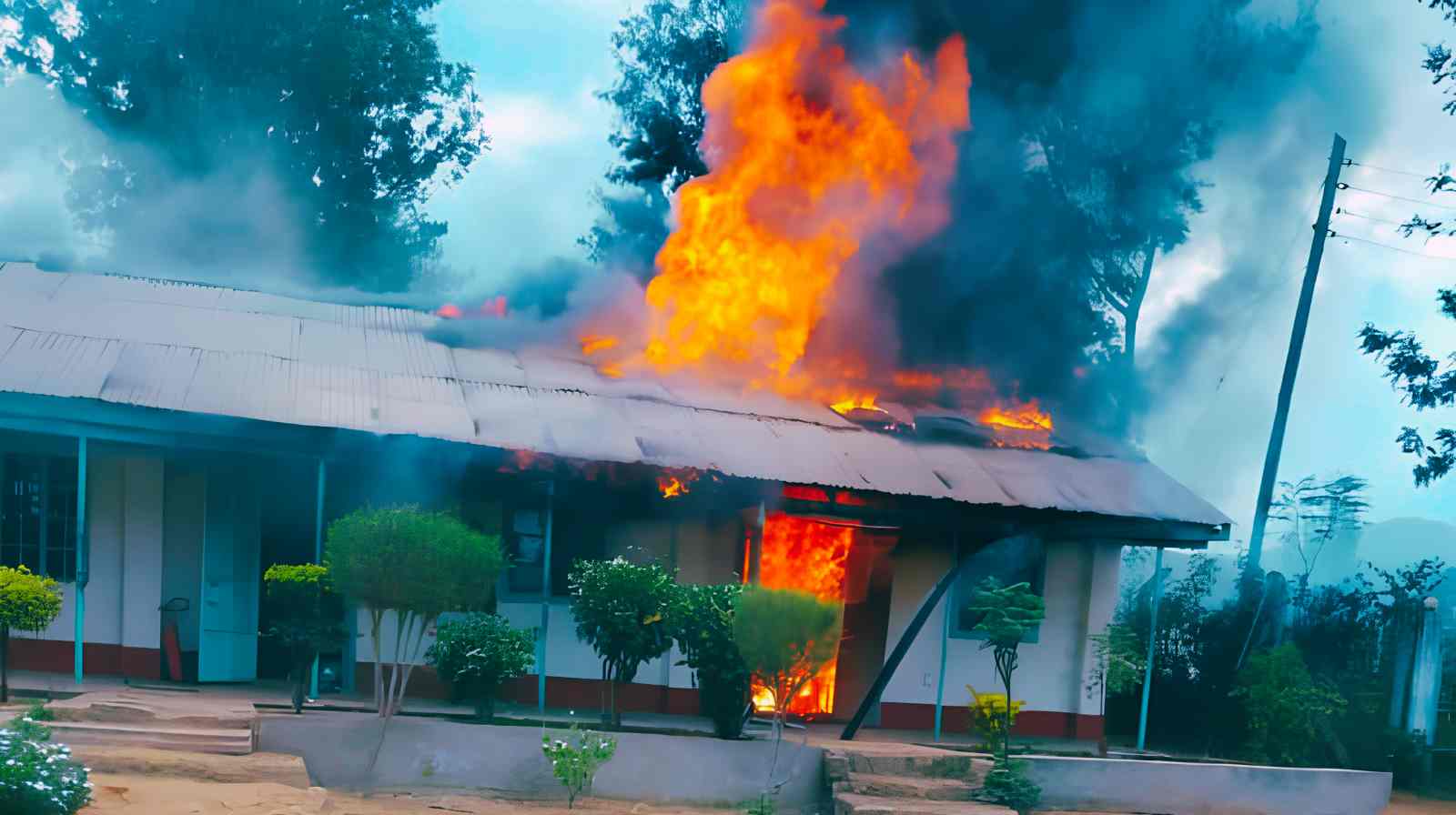
School Unrest: Parents, Teachers and Government Clash Over Responsibility.
The recent wave of student unrest that affected schools across Kenya has triggered renewed debate among parents, teachers, school administrators and government officials regarding responsibility for the disruption of learning, destruction of property and loss of life reported in several institutions.
Although incidents of unrest have reportedly declined in recent weeks, stakeholders continue to differ on the underlying causes and appropriate interventions required to address the situation.
President William Ruto stated that responsibility for learner conduct should not be placed solely on educational institutions and government agencies. Speaking during the Rhino Charge event in Wamba, Samburu County, the President emphasized the role of parents in the upbringing and discipline of children.
“Our children are not the responsibility of the government alone. It is first and foremost the responsibility of parents. Society should stop shifting blame to schools and government institutions whenever learners engage in destructive behaviour,” President Ruto said.
The Ministry of Education had previously announced plans to establish a task force to investigate the causes of the unrest and recommend corrective measures. However, the task force announced by Education Cabinet Secretary Julius Ogamba has not yet been constituted.
The National Parents Association has raised concerns regarding the implementation of school safety measures and parental involvement in educational institutions. National Parents Association Chairperson Silas Obuhatsa stated that existing school safety policies have not been fully implemented.
“The government must follow up and make sure those policies have been implemented by schools as required. If the safety regulations had been fully implemented, we would not be seeing some of these incidents,” Mr Obuhatsa said.
He further stated that parents have increasingly been excluded from matters affecting schools and learners, limiting opportunities for early identification and resolution of emerging challenges.
“Parents have not been fully involved in matters concerning schools and their children. Yet they are key stakeholders. When parents are excluded, many issues go unnoticed until they become serious problems,” he said.
Mr Obuhatsa cited restricted access to school facilities as one of the concerns raised by parents.
“Parents should be able to go to schools and engage with administrators and teachers on matters affecting their children. Today, there are so many restrictions in schools. You find areas marked ‘Staff Only’ and parents are not allowed access. Parents are increasingly being kept away from schools,” he said.
According to the National Parents Association, effective parental participation in school management, safety discussions and learner welfare matters remains necessary in addressing recurring incidents of unrest.
“The only way forward is to involve parents. They must be part of discussions on school rules, school management and the safety of their children,” Mr Obuhatsa said.
Teachers’ unions have attributed the unrest to broader societal challenges affecting learners. Kenya Union of Post Primary Education Teachers (Kuppet) Deputy Secretary-General Moses Nthurima stated that incidents occurring in schools mirror developments in the wider society.
“What students are doing is a reflection of society. When you look at what is happening on the streets, people are burning tyres, looting buildings and engaging in violence. The tension in the country is finding its way into our schools,” Mr Nthurima said.
Mr Nthurima proposed consideration of an early mid-term break as a temporary measure to reduce tensions among learners.
“I believe schools need to be closed for the midterm break so that we can absorb the tension building within the student population. It has happened before, and I do not think we should wait for more casualties among our children,” he said.
He also stated that school administrators are increasingly being confronted with security-related challenges that fall outside their professional responsibilities.
“Principals are not policemen. They cannot deal with criminal activities. The only practical solution for now is to allow learners to go home for a short break and return when the environment is calmer,” Mr Nthurima said.
According to Cabinet Secretary Julius Ogamba, unrest incidents have affected 204 secondary schools across the country, with boarding institutions accounting for the majority of reported cases.
The Ministry of Education reported that the disturbances resulted in injuries, destruction of property and fatalities in some institutions.
“We have so far received reports of unrest affecting 204 secondary schools across the country. Of those, 59 have since returned to school and resumed their studies, with more continuing to return,” Mr Ogamba said.
The Cabinet Secretary noted that the affected institutions represent less than two percent of all senior schools nationally, indicating that the majority of schools have remained operational and stable.
Mr Ogamba stated that individuals found responsible for acts of violence, destruction of property and other unlawful activities would be subjected to legal action.
“Whatever grievances our learners may have, there can never be justification for causing death and destroying property. Any grievances must be addressed through appropriate channels without resorting to unlawful actions or violence,” he said.
The Ministry of Education has announced plans to establish a multi-sectoral team to investigate the causes of the unrest and develop recommendations aimed at preventing future occurrences.
“The current pattern of unrest should cause all of us to engage in collective reflection about our children and their future,” Mr Ogamba said.
Read Also: End of Boarding Schools? Senators Table Proposal That Could Change Education Forever
Schools have been directed to convene Parents Association meetings to discuss learner welfare, safety and related concerns. Parents have also been encouraged to engage learners during school breaks to identify and address issues affecting their well-being and conduct.
The ongoing debate among government officials, parents’ representatives, teachers’ unions and school administrators continues as stakeholders await the formation of the proposed task force and the implementation of measures intended to address the recurring incidents of unrest in secondary schools across the country.
School Unrest: Parents, Teachers and Government Clash Over Responsibility.
Follow Teachers Updates on Facebook, LinkedIn, X (Twitter), WhatsApp, Telegram, and Instagram. Get in touch with our editors at hello@teachersupdates.news.
