

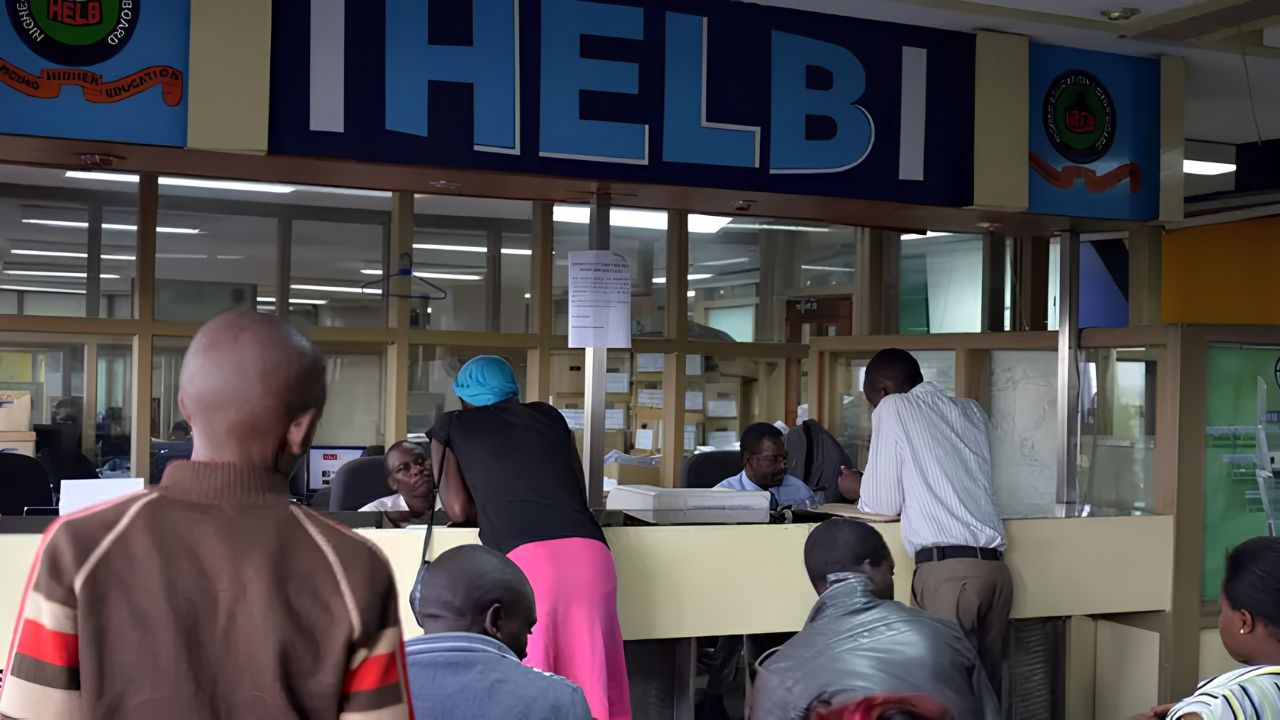
HELB deductions made from an employee’s August salary must reach the Higher Education Loans Board by September 15, 2026. That is the rule the board restated in a notice issued on Monday, September 14 — not a new policy, but a reminder of a standing legal deadline that employers routinely miss.
Under HELB’s own framework, any deduction taken from a beneficiary’s pay in a given month is due at HELB by the 15th day of the following month. Miss that date, and both the employer and the employee feel the consequences, even though only the employer controls the payment.
The three obligations every employer has
HELB places employer compliance under three duties, described on the Employer Portal as disclose, deduct and discharge.
| Obligation | What it requires | Where it happens |
|---|---|---|
| Disclose | Inform HELB when you hire someone who has an outstanding HELB loan | HELB Employer Portal, “My Employees” / Disclosure of Staff section |
| Deduct | Withhold the exact monthly amount HELB has set for that employee, shown on the portal’s billing schedule | Payroll, based on the deduction rate HELB generates |
| Discharge | Remit everything deducted to HELB by the 15th of the following month | Employer Portal, Remittance tab, using the CSV template |
Read Also; KUCCPS Interfaculty Transfer: How First-Year Students Can Change Their Course
These three duties trace back to the Higher Education Loans Board Act. Section 16 of the Act requires employers to notify HELB when they engage a loanee, and Section 17 sets out the penalty for failing to do so.
HELB’s own Employers’ Portal guide quotes the obligation directly: deductions must be remitted “by the 15th day of the following month,” and late or non-remittance “attracts a penalty equal to 5% of the total amount due… for each month or part of a month” the money remains outstanding.
What happens if an employer misses the deadline
Two separate penalties can apply, and they are not mutually exclusive.
- KSh 3,000 per employee, per month — charged where an employer fails to declare a beneficiary on its staff or fails to remit deductions already made. HELB has said this penalty is calculated from the date the employee was hired, not from when HELB catches the non-compliance, which is what makes backlogs expensive.
- 5% of the unpaid amount, for every month or part of a month it stays outstanding — this applies specifically to deductions that were withheld from an employee’s pay but not forwarded to HELB.
Because the two penalties stack, a company that neither discloses a beneficiary nor remits their deductions for three straight months does not simply owe three months of contributions. It owes the original deductions, three months of the flat KSh 3,000 fine (KSh 9,000), and a compounding 5% charge on whatever remains unpaid for each of those months. HELB has framed this structure as a deliberate incentive: sustained delay costs noticeably more than paying on time.
This isn’t an idle threat. In March 2026, HELB confirmed it was pursuing more than 20,000 employers and roughly 360,000 individual beneficiaries linked to unpaid or undeclared loans, and that it had already inspected over 1,800 employers and applied penalties totalling more than KSh 83 million. The September 14 notice is part of the same ongoing enforcement push, not a one-off warning.
Why the delay hurts the employee, not just the employer
This is the part many staff members don’t realise until it affects them. Once an amount is deducted from a payslip, HELB treats it as the employee’s problem to have paid — but the loan account itself only updates once HELB actually receives and processes the money from the employer.
Read Also: TVET Colleges Are Replacing Graduation Gowns With Trade Attire
That means an employee can see a HELB deduction line on their payslip every month, assume their loan balance is falling, and still show up as behind on repayment or even in default on HELB’s own systems if the employer is sitting on the funds. For a HELB beneficiary, that can affect their standing for a HELB compliance certificate, which some employers — including parts of the public service — require before confirming appointments or promotions.
For teachers on the TSC payroll specifically, HELB deductions appear as a line item on the monthly T-Pay payslip alongside PAYE, SHA and NSSF contributions, and TSC as the central employer handles the disclose-deduct-discharge cycle on behalf of all TSC-employed teachers.
The practical exposure described in this notice is greater for staff employed directly by school boards of management (BOMs), private schools, colleges, NGOs and private companies, where the institution itself — not a large centralised payroll system — is responsible for uploading the CSV file and making the payment on time.
How the remittance process actually works
The September 14 notice restates a process that has been in place through the HELB Employer Portal for several years, now run through employers.helb.co.ke.
- Log in or register. Returning employers use their employer code and password; first-time employers register the organisation on the portal before doing anything else.
- Disclose staff. Under “My Employees,” upload a CSV list of staff, or add individuals one at a time. The portal flags which employees are HELB beneficiaries and returns their outstanding balance and monthly deduction rate.
- Deduct the correct amount. Use the rate the portal generates for each beneficiary — not a flat percentage the employer decides on its own. Paying more or less than the generated figure can cause the remittance to be rejected.
- Prepare the remittance file. In the Remittance tab, download the CSV template, enter the employee and repayment details for the month, and upload the completed file.
- Make the payment before the 15th. Once the upload is processed, complete payment through the portal’s prescribed channels and keep the generated e-slip as proof of remittance.
The portal will not accept a remittance entry for a beneficiary who has already cleared their loan, which is a useful built-in check against overpayment, but it also means employers should keep beneficiary records current rather than relying on last year’s list.
Read Also: TSC Transfer and Swap Module: Step-by-Step Guide (2026 Update)
What employers should do now
- Confirm your organisation is registered on the Employer Portal before the next cycle closes.
- Cross-check your current staff list against HELB’s disclosure records — new hires who are HELB beneficiaries must be declared within three months of employment.
- Reconcile last month’s deductions against what was actually remitted; any gap is exposed to both penalties described above.
- Keep proof of every remittance (the e-slip), since this is what an employer would rely on if a beneficiary’s account isn’t reflecting a payment already made.
- Where a genuine backlog exists, engage HELB directly rather than waiting for an inspection — HELB has previously offered waivers on accumulated borrower penalties, though employer-side flat fines are a separate matter and not guaranteed to be waived.
What employees can do if their employer isn’t remitting
If your payslip shows a HELB deduction but your HELB loan balance isn’t moving, don’t assume the loan itself is the problem.
Check your loan statement on the HELB Self-Service Portal or the HELB mobile app against your payslip history, and if there’s a mismatch, raise it with your employer’s HR or payroll office first, since HELB deals directly with the employer for remittance issues. If the employer is unresponsive, HELB’s borrower service channels can be used to flag an employer discrepancy.
Frequently asked questions
When exactly is the HELB remittance deadline? By the 15th day of the month following the month in which the deduction was made. Deductions taken from an August payslip are due at HELB by September 15.
What if the 15th falls on a weekend or public holiday? HELB’s published rule states the 15th itself; the board has not issued a standing exception for weekends in its public guidance, so employers should treat the calendar date as firm unless HELB communicates otherwise for a specific month.
Does the KSh 3,000 penalty apply per employer or per employee? Per employee, per month. An employer with several undeclared or unremitted beneficiaries accumulates the fine separately for each one.
Can an employer be penalised for a beneficiary they didn’t know about? Employers are required to notify HELB within three months of hiring anyone who turns out to be a loanee. Reasonable excuse can be a factor under the Act, but the safest approach is to disclose every new hire promptly rather than assume HELB already knows.
Does this affect employees who have already cleared their HELB loan? No. The Employer Portal automatically rejects remittance entries for beneficiaries whose loans are already settled, so a cleared loan should not generate a fresh deduction.
Is the interest or penalty on the employee’s loan separate from the employer’s fine? Yes. The 5% employer penalty applies to the employer for late remittance of amounts already deducted. A beneficiary who is personally behind on repayment (for reasons unrelated to their employer) faces a different, separate penalty regime under HELB’s borrower rules.
Read Also: TSC Forms: Download All Official Teachers Service Commission Forms (PDF)
HELB Employer Loan Deduction Deadline: What the September 2026 Notice Means.
Follow Teachers Updates on Facebook, LinkedIn, X (Twitter), WhatsApp, Telegram, and Instagram. Get in touch with our editors at hello@teachersupdates.news.
