

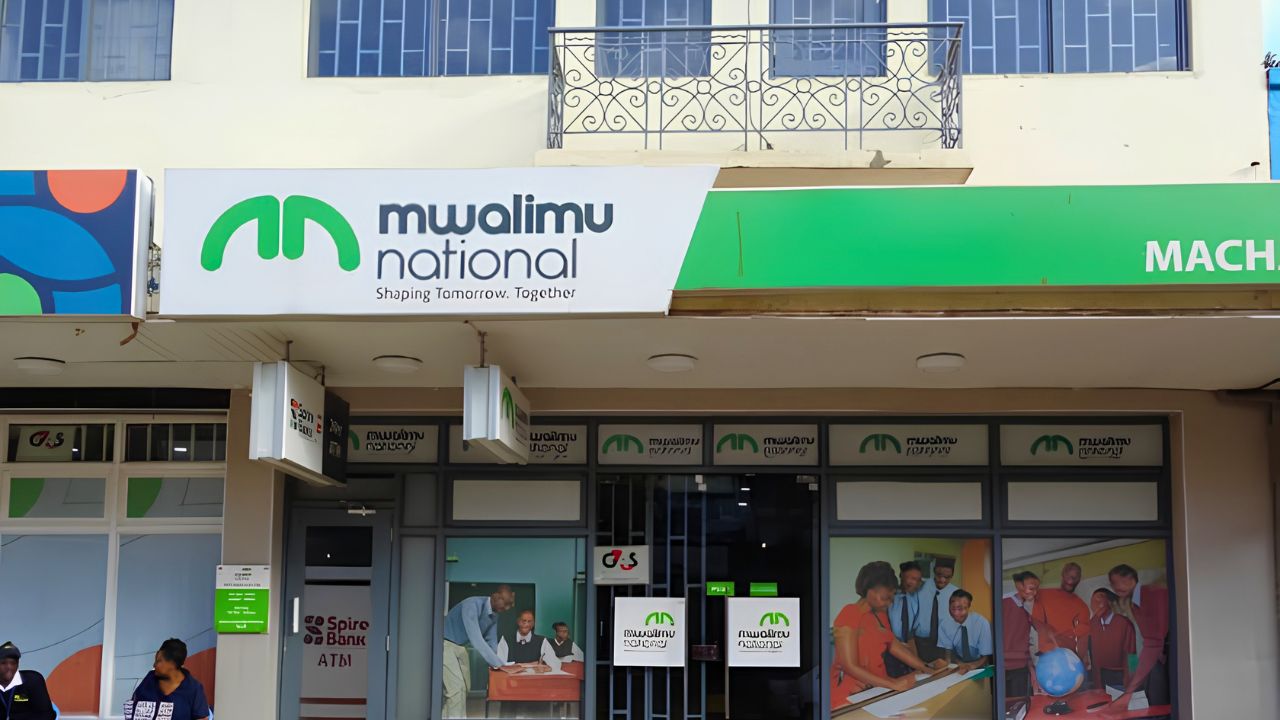
Mwalimu National Sacco has revised three of its loan products for 2026, according to the SACCO’s own announcement: an extended top-up waiver on BOSA and FOSA loans, a longer repayment window for the Jawabu Loan, and higher limits on the M-Loan. The changes are dated as taking effect from 20th July 2026.
Here’s what each change means in practice, and how to confirm the details before you apply.
The Changes at a Glance
| Product | What Changed | Key Dates (as announced) |
|---|---|---|
| BOSA/FOSA Top-Up Waiver | Waiver on top-up charges extended | Extended from 20 July 2026 to 31 August 2026 |
| Jawabu Loan | Repayment period lengthened | From 108 to 120 months; window: 20 July–30 September 2026 |
| M-Loan | Limit and tenure increased | Up to Ksh 200,000, repayable over up to 12 months |
1. What the BOSA/FOSA Top-Up Waiver Means
A “top-up” is when a member with an existing BOSA (Back Office Service Activity) or FOSA (Front Office Service Activity) loan borrows additional funds against the same facility rather than closing it and starting a fresh loan.
Top-ups normally attract processing or top-up charges, so a waiver period removes that cost for members who refinance or increase their borrowing within the stated window.
Mwalimu National has run waiver periods on top-up charges before — the SACCO circulated a similar 100% waiver on BOSA and FOSA top-up charges earlier in 2026.
The current announcement extends that kind of relief through 31st August 2026, giving members roughly six extra weeks beyond the original 20th July cut-off to apply without the standard top-up fee.
What this means for you: if you’ve been holding off on topping up a BOSA or FOSA loan because of the processing cost, this is the window to act. Once the waiver lapses, standard top-up charges are expected to apply again.
2. Jawabu Loan: Repayment Period Extended to 120 Months
The Jawabu Loan is Mwalimu National’s check-off loan product — it’s deducted directly from your payslip and doesn’t require guarantors, which makes it one of the faster products to process.
According to the SACCO, the maximum repayment period has been extended from 108 months to 120 months (10 years) for applications made between 20th July 2026 and 30th September 2026.
A longer term spreads the same loan amount over more months, which lowers the monthly deduction — useful if you’re trying to protect your net pay under the 1/3 salary rule that governs how much Kenyan SACCOs can deduct from a member’s income.
The trade-off is the usual one with longer terms: a lower monthly instalment generally means more interest paid over the life of the loan, since interest accrues for a longer period. Run the numbers with the SACCO’s loan calculator or a branch officer before committing to the full 120 months if a shorter term is affordable for you.
Window to note: this extended term applies only to applications submitted within the stated three-month window (20 July–30 September 2026). Applications outside that period may revert to the standard term.
3. M-Loan: Higher Limit, Longer Tenure
The M-Loan is Mwalimu National’s mobile/digital short-term credit facility, accessed through the SACCO’s app or USSD channels and typically available to members whose salary or SAYE (Save As You Earn) savings run through FOSA.
The SACCO says the maximum limit has been raised to Ksh 200,000, with repayment now stretched to up to 12 months. For a product built around quick, guarantor-free access to cash, a full year to repay rather than a shorter cycle gives members more breathing room on emergencies or short-notice expenses without needing to visit a branch.
Who Can Access These Products?
These changes apply to existing Mwalimu National Sacco members in good standing. Broadly, the SACCO’s membership includes TSC employees in post-primary and TVET institutions, TSC primary school teachers with diploma-level qualifications and above, university lecturers, Mwalimu National staff and subsidiaries, and — subject to conditions — spouses and adult children of existing members. Loan eligibility generally requires an active membership, with the member’s salary passing through the Sacco’s FOSA account.
If you’re a primary school teacher with qualifications below diploma level or work in a school’s Board of Management, admission and loan access can still be possible but is typically at the SACCO board’s discretion, so it’s worth confirming your specific eligibility at a branch rather than assuming.
Read Also: TSC Retirement Form: How Teachers Apply for Retirement in Kenya
How to Apply
Mwalimu National members can access these enhanced terms through the same channels used for any loan application:
- Visit a branch — bring your membership number and ID for identity verification, and ask specifically about the current top-up waiver, Jawabu term, or M-Loan limit, since these are time-bound and staff can confirm what’s active on the day you apply.
- Call the customer care contact centre to confirm current terms before you travel to a branch.
- Use the mobile app or USSD channel for M-Loan applications, which are designed to be processed without a branch visit.
Mistakes to Avoid
- Applying outside the stated window. The Jawabu Loan’s 120-month term and the top-up waiver both have hard cut-off dates. Applying even a few days late could mean reverting to standard terms and fees.
- Choosing the maximum term without checking total interest. A 120-month Jawabu Loan lowers your monthly deduction but increases the total interest paid. Ask for a full repayment schedule, not just the monthly figure.
- Assuming the M-Loan limit applies uniformly. Ksh 200,000 is described as the new maximum — your actual limit still depends on your salary, deposits, and the SACCO’s 1/3 salary rule, so don’t assume you’ll be approved for the full amount.
- Not confirming the figures directly with the SACCO before applying. Loan terms at any SACCO can be updated or corrected after initial publicity. Treat published dates and limits as the starting point for a conversation with a branch officer, not the final word.
Read Also: TSC HOI Control Sheet: How to Submit It on T-Pay
Frequently Asked Questions
When do the new Mwalimu National Sacco loan terms take effect?
The SACCO has set 20th July 2026 as the effective date for these changes.
Until when can I apply for the top-up waiver on BOSA and FOSA loans?
The waiver period has reportedly been extended to run until 31st August 2026.
What is the new M-Loan limit, and how long do I have to repay it?
The M-Loan’s maximum limit has been raised to Ksh 200,000, with a repayment period of up to 12 months.
How long is the enhanced Jawabu Loan term available?
The 120-month repayment term applies to Jawabu Loan applications made between 20th July 2026 and 30th September 2026, according to the SACCO.
Do I need guarantors for the Jawabu Loan or M-Loan?
Both are check-off/digital products designed to move faster than guarantor-based BOSA loans, which is part of their appeal for short-notice borrowing needs — but confirm current guarantor requirements with the SACCO, since product conditions can be adjusted.
Before You Apply
Loan terms, deadlines and limits at any SACCO can shift with board decisions, and published dates aren’t always updated everywhere at the same time. Before submitting an application under any of these enhanced terms, confirm directly with Mwalimu National Sacco — by branch visit, the customer care line, or the official app — that the waiver, Jawabu term, and M-Loan limit described above are still current on the day you apply.
Follow Teachers Updates on Facebook, LinkedIn, X (Twitter), WhatsApp, Telegram, and Instagram. Get in touch with our editors at hello@teachersupdates.news.
