

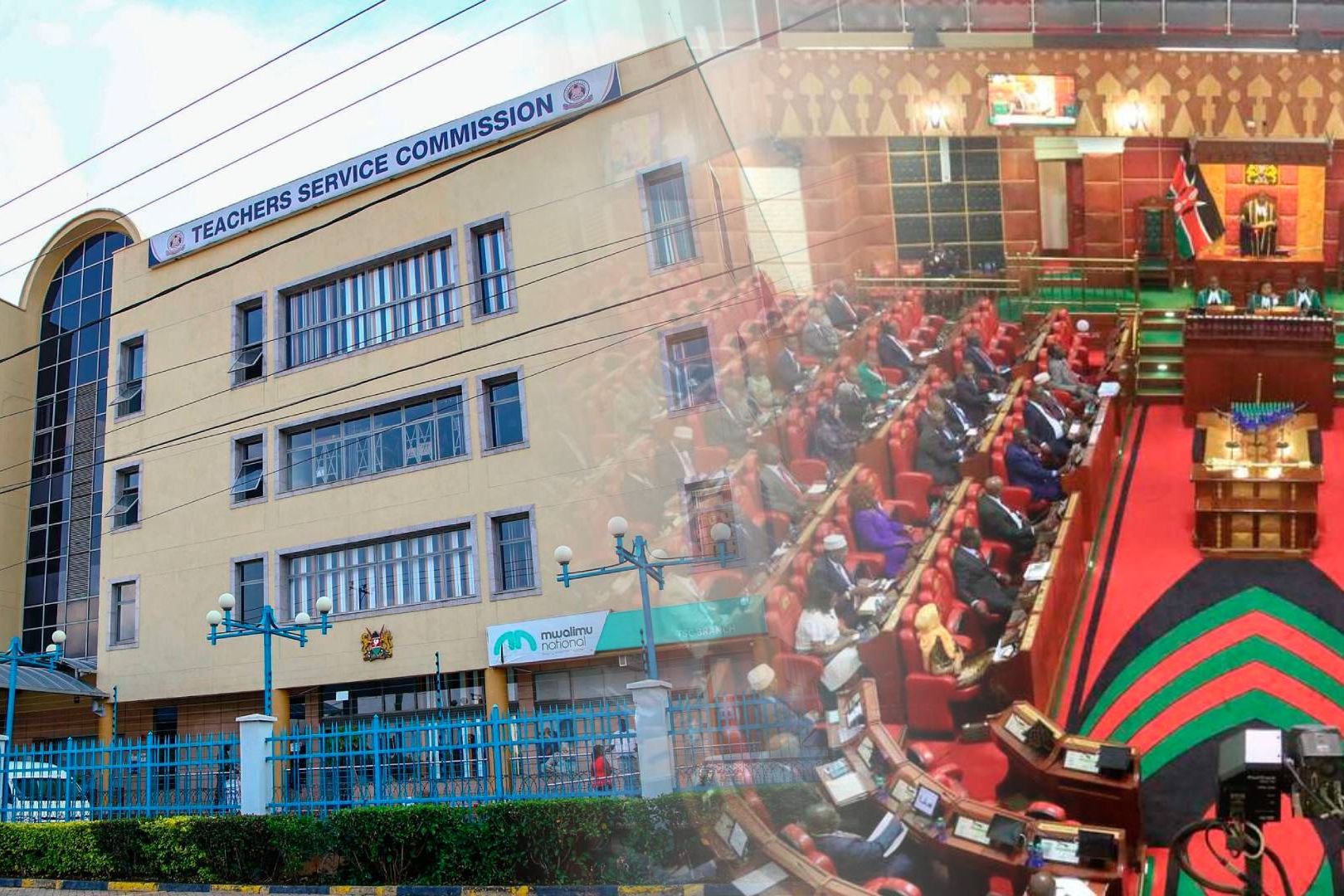
Deputy Principals Take TSC Battle to Parliament Over Career Stagnation.
Deputy principals have petitioned Parliament over alleged career stagnation under the Teachers Service Commission (TSC) Career Progression Guidelines (CPG), even as the commission moves to finalize a revised promotion framework required under the 2025–2029 Collective Bargaining Agreement (CBA).
The TSC is expected to publish the new Career Progression Guidelines by the end of June after consultations with teachers’ unions and submission of the final draft to the Salaries and Remuneration Commission (SRC) for consideration.
The dispute has emerged as secondary school deputy principals seek intervention from the National Assembly, arguing that the current promotion structure has disadvantaged thousands of school administrators despite years of service, additional academic qualifications and increased leadership responsibilities.
Petition Before Parliament
A petition filed before the National Assembly by 16 deputy principals led by Maurice Otieno Ouma and Paul Juma Were accuses the TSC of using the 2018 Career Progression Guidelines to limit career advancement opportunities for deputy principals appointed between 2001 and 2014.
The petitioners argue that many deputy principals have remained in the same grades for extended periods despite serving in leadership positions and acquiring higher qualifications.
According to the petition, the conversion of teachers who were previously in Job Grade N under the former scheme of service to Grade D1 under the 2018 Career Progression Guidelines effectively disadvantaged many deputy principals.
“The implementation of the Career Progression Guidelines has occasioned discrimination, inequity and stagnation among deputy principals who have diligently served in leadership positions for many years,” the petition states.
The petition further argues that the conversion process failed to consider the duration teachers had already spent in various job groups before the introduction of the new grading structure.
“It did not take into account the number of years that the teachers had stagnated in the various job groups, and in particular teachers in Job Groups M and N whose conversion could be to D3 and D4,” the petition states.
National Assembly Committee Assigned Investigation
National Assembly Speaker Moses Wetang’ula referred the petition to the Departmental Committee on Education for investigation.
The committee has been directed to examine the claims raised by the petitioners and submit findings and recommendations to the National Assembly.
The petition seeks parliamentary intervention to compel the TSC to review the implementation of the Career Progression Guidelines and address concerns raised by deputy principals regarding promotion and grading structures.
Review of Career Progression Guidelines
The TSC currently uses the 2018 Career Progression Guidelines to manage teacher promotions.
The framework has faced criticism from teachers’ unions, which have argued that it does not provide a sufficiently clear relationship between performance and promotion and lacks explicit qualification requirements for advancement across some grades.
The proposed 2026 Career Progression Guidelines introduce dual career pathways and a unified grading structure designed to facilitate faster progression for teachers.
Under the proposed framework, all teachers would progress through a common grading structure ranging from Teacher 9, the entry-level grade, to Teacher 1, the highest grade.
The commission has indicated that the revised framework is intended to align with the Competency-Based Education (CBE) system and reflect the expanded professional and administrative responsibilities undertaken by teachers.
TSC Acting Chief Executive Officer Evaleen Mitei stated that the existing career structures no longer adequately address current educational and administrative demands.
“Career progression structures developed a decade ago may no longer adequately respond to today’s expanded curriculum as well as administrative responsibilities that our teachers undertake on a day to day basis,” Ms Mitei said during consultations with teachers’ unions.
TSC Chairman Dr Jamleck Muturi described the proposed framework as a significant reform intended to address longstanding gaps within the promotion system.
“This is the most progressive document that has been generated by this Commission since 1960 addressing the gaps and sealing loopholes that have been there,” Dr Muturi said.
Challenges Identified Under the 2018 Framework
The TSC has acknowledged several challenges that emerged during implementation of the 2018 Career Progression Guidelines.
Among the issues identified are:
- Disparities in remuneration between teachers, school administrators and Curriculum Support Officers (CSOs).
- Unequal treatment of teachers possessing similar academic and professional qualifications.
- Difficulties in aligning school categories with remuneration structures.
- Lengthy promotion pathways that slowed career progression.
- Integration of professional teaching and administrative functions within a single career progression pathway.
The proposed reforms seek to separate classroom teaching and administrative leadership into distinct career tracks.
The framework would allow teachers to advance to the highest professional levels without necessarily transitioning into administrative positions.
Members of Parliament Raise Concerns
The petition prompted extensive debate among Members of Parliament, with legislators describing the concerns raised by deputy principals as reflective of wider challenges affecting teachers across the country.
Owen Baya, who previously served as a deputy principal, highlighted the operational responsibilities undertaken by deputy principals in schools.
“Anybody who has worked in a school understands that the deputy principal is the engine of the institution. In many cases, they arrive before everyone else and leave after everyone else. They handle discipline, supervise teachers, manage examinations and ensure the school runs smoothly,” he said.
Janet Sitienei said delayed promotions had affected teacher motivation and weakened leadership structures within schools.
“When teachers feel that hard work is not rewarded, productivity suffers. We need a promotion system that is predictable, transparent and fair,” she said.
Mugambi Rindikiri raised concerns about consistency in promotion processes and called for equal opportunities for teachers regardless of their deployment regions.
“We must ensure that promotions are based on objective criteria and not geography or other considerations. Every teacher deserves an equal opportunity to advance regardless of where they serve,” he said.
Read Also: School Unrest: Parents, Teachers and Government Clash Over Responsibility
Demands Presented by Deputy Principals
The petitioners are seeking several interventions from Parliament and the Teachers Service Commission, including:
- Recognition of years served under the previous job group structure.
- Fair consideration of deputy principals during promotion exercises.
- Harmonisation of grading systems.
- Establishment of clear career advancement pathways for school administrators.
- Resolution of disparities arising from the transition to the current grading framework.
- Equal treatment of deputy principals compared to other categories of teachers during promotion and career progression processes.
The Education Committee is expected to examine the concerns raised in the petition as the Teachers Service Commission finalizes the revised Career Progression Guidelines scheduled for implementation under the 2025–2029 Collective Bargaining Agreement.
Deputy Principals Take TSC Battle to Parliament Over Career Stagnation.
Follow Teachers Updates on Facebook, LinkedIn, X (Twitter), WhatsApp, Telegram, and Instagram. Get in touch with our editors at hello@teachersupdates.news.
