

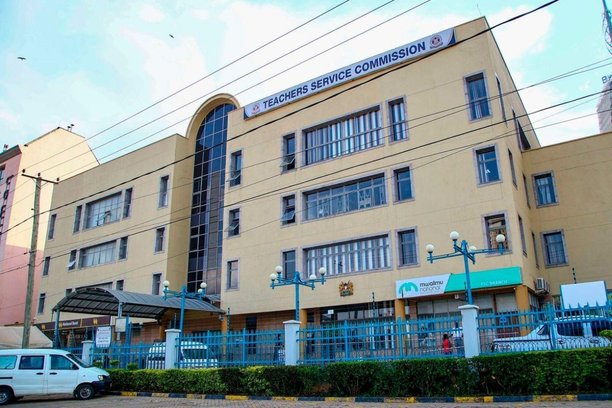
TSC Wealth Declaration: What Kenyan Teachers Need to Know.
Every TSC-employed teacher in Kenya has a legal duty to declare their income, assets, and liabilities once every two years. This is not a TSC policy choice, it is a statutory requirement, and failing to comply can mean fines, disciplinary action, or worse. Here is what the rule actually requires, where things stand for the current cycle, and what to do whether you’ve already declared or not.
What is wealth declaration, and why must teachers do it?
Wealth declaration, formally the Declaration of Income, Assets and Liabilities (DIALs) — requires public officers to disclose what they earn, own, and owe, along with the same details for their spouse and any dependent children under 18. The goal is to give the government a baseline record that can flag unexplained wealth or conflicts of interest.
For years this obligation sat under Sections 26 and 27 of the Public Officer Ethics Act (POEA). That has changed. President William Ruto assented to the Conflict of Interest Act, 2025 on 30 July 2025, and it came into force on 19 August 2025, repealing the POEA entirely. The declaration duty now lives in Section 31 of the new Act, with timelines set out in Section 34.
The core rule hasn’t changed: declare every two years. What has changed is the enforcement muscle behind it, and a few procedural details covered below.
Read Also: TSC Retirement Form: How Teachers Apply for Retirement in Kenya
Who has to declare?
Every teacher employed by the TSC must submit a declaration, including those who are:
- On leave of any kind
- Under interdiction or suspension
- On authorised absence from duty
TSC secretariat staff are also covered. The one group exempted is intern teachers, who are not required to file a declaration during their internship.
Teachers who have been in service for less than two years file an initial declaration rather than the standard two-year (biannual) one, and the online system is built to route them accordingly.
Under the Conflict of Interest Act, an initial declaration is due within 30 days of appointment and must cover the one-year period before you joined. The Act also introduces a clearer exit declaration requirement — due within 30 days of leaving service — for teachers who resign, retire, or otherwise exit TSC employment.
Where and how to declare
Declarations are filed exclusively online through the Teachers Online Portal: https://teachersonline.tsc.go.ke/. TSC discontinued manual, paper-based submissions years ago and will not accept a hard-copy DIALs form as proof of compliance under any circumstances.
You can complete the form on a computer, laptop, tablet, or smartphone. A step-by-step instruction manual is available on the portal under the “Download Manual” link next to the Declaration option.
Steps to complete your declaration:
- Log in to the portal using your TSC number and password. First-time users will need to activate an account, which requires a working phone number and email.
- Go to the Wealth Declaration menu and select the correct category: Biannual (routine two-year declaration), Starting Declaration (new employees), or Exit Declaration (leaving employees).
- Confirm your personal details — address, marital status, county, and education level — as prompted.
- Enter your income, assets, and liabilities for the statement period. Click “Add/Save” after each entry; unsaved entries are not captured.
- Add dependants’ details — your spouse(s) and any children under 18.
- Enter witness details (name and ID number) as required by the form.
- Review every section carefully, then press Submit. The system rejects incomplete forms outright, so don’t leave sections blank.
Access to the portal requires an activated official @mwalimu.tsc.go.ke email address — this is what the system uses for password resets and account verification. Once you submit successfully, a copy of your completed declaration is emailed to you automatically. Keep that email as your proof of compliance; if you don’t receive it, your submission likely didn’t go through.
The 2025/2026 declaration cycle: where things stand
The most recent cycle covered the 2023/2025 statement period — income, assets, and liabilities held between November 2023 and 31 October 2025. According to TSC’s circular dated 24 November 2025, all State and Public Officers are required to declare their income, assets and liabilities every two years in line with Section 31 of the Conflict of Interest Act. The declaration window opened in November 2025 and was set to close on 31 December 2025 at midnight, with heads of institutions required to have their TMIS records updated by 29 October 2025 to keep the process running smoothly.
Read Also: TSC Transfer and Swap Module: Step-by-Step Guide (2026 Update)
The rollout was not without friction. Multiple reports from teachers indicated the portal was slow to activate at the start of November, and persistent system glitches into late December prompted TSC to push the closing date back by roughly a week, into early January 2026, to give affected teachers a fair chance to submit. If you’re only now confirming whether you completed this cycle, treat that as closed and act immediately if you didn’t — see the next section.
As has happened after previous cycles, TSC is expected to compile and circulate a list of non-compliant teachers to sub-county and county offices for follow-up action. This has been standard practice after every declaration window since at least 2019.
If you missed the 2025/2026 deadline: the legal duty to declare doesn’t disappear once a deadline passes. Contact your head of institution or TSC sub-county office immediately, explain the circumstances, and attempt to complete the declaration through the portal or as guided by TSC. Acting promptly and voluntarily is treated far more favourably than being flagged on a non-compliance list.
When is the next cycle? Based on the established two-year pattern (2019, 2021, 2023, 2025), the next standard declaration window should open around November 2027, with a 31 December 2027 closing date, covering the November 2025–October 2027 period. TSC typically confirms this with a fresh circular closer to the time, so check the portal or your school’s official communication a few months out rather than relying on the date alone.
What happens if you don’t declare — or lie on the form
Penalties for non-compliance now sit under two layers: TSC’s internal administrative process, and the criminal penalties in the Conflict of Interest Act itself.
TSC administrative consequences can include show-cause letters, formal warnings, salary stoppage, and further disciplinary action under TSC’s own procedures — this applies whether you fail to declare at all or your declaration is found incomplete or false.
Statutory penalties are significantly heavier under the new law than they were under the old POEA. Under the Conflict of Interest Act, individual offenders face fines of up to Sh4 million, imprisonment for up to 10 years, or both. The law also imposes a mandatory penalty equal to twice the amount of any benefit obtained through the violation. This is a sharp increase from the old POEA standard of a Ksh 1,000,000 fine or up to one year in prison, which applied for years under the previous law and is still cited in some older TSC materials.
Read Also: TSC HOI Control Sheet: How to Submit It on T-Pay
The table below summarises the shift:
| Old law (POEA, repealed 19 Aug 2025) | New law (Conflict of Interest Act, 2025) | |
|---|---|---|
| Legal basis | Sections 26 & 27, POEA | Section 31 & 34, Conflict of Interest Act |
| Max fine | Ksh 1,000,000 | Up to Ksh 4,000,000 |
| Max imprisonment | 1 year | Up to 10 years |
| Extra penalty | None specified | Mandatory penalty of twice any benefit obtained |
| Oversight body | TSC / EACC (limited role) | EACC given broader enforcement powers |
| Corporate offenders | Not addressed | Fines of up to Ksh 10,000,000 |
The Ethics and Anti-Corruption Commission (EACC) has been mandated to oversee and enforce the new Act, working alongside TSC as the “responsible Commission” that collects teachers’ declarations specifically.
Common mistakes to avoid
- Leaving the SUBMIT step for last minute: the portal historically slows down or becomes unreachable in the final days before a deadline, as happened repeatedly in December 2025.
- Submitting incomplete sections: the system rejects incomplete forms, so a declaration that looks “sent” but wasn’t fully filled in may not count.
- Not checking for the confirmation email: if it never arrives in your @mwalimu.tsc.go.ke inbox, don’t assume you’re compliant — log back in and verify your submission status.
- Assuming a paper copy is acceptable: it is not, under any version of the rule.
- Forgetting dependants’ details: spouse and under-18 children’s income, assets, and liabilities are a mandatory part of the form, not optional add-ons.
Frequently asked questions
Is TSC wealth declaration mandatory for all teachers?
Yes, for every teacher on TSC’s payroll, including those on leave, suspension, interdiction, or authorised absence. Only intern teachers are exempt.
What email do I need to access the portal?
Your official @mwalimu.tsc.go.ke address. Without an activated account on that domain, you cannot log in, set a password, or receive your submission confirmation.
Can I submit a paper DIALs form instead?
No. TSC has discontinued manual submissions; only the online portal counts.
What if I’m a newly employed teacher?
You file an initial declaration rather than waiting for the next biannual cycle. Under the Conflict of Interest Act, this is due within 30 days of your appointment.
What happens when I leave TSC service?
You are required to file an exit declaration within 30 days of leaving, covering your financial position at that point.
Where can I check the current deadline?
Always confirm directly on https://teachersonline.tsc.go.ke/ or through an official TSC circular, since dates can shift — as happened with the extension into January 2026.
Read Also: Mwalimu National Sacco Loan Changes 2026: Jawabu, M-Loan and Top-Up Waiver Explained
This article explains general legal and procedural requirements and reflects information available as of 15 September 2026. It is not legal advice. For your specific situation, consult TSC directly or a qualified advocate.
Sources: Kenya Law — Conflict of Interest Act, 2025 (Act No. 11 of 2025); TSC circular on the 2023/2025 DIALs cycle (24 November 2025); EACC public statement on the Act’s commencement (19 August 2025); Teachers Online Portal (teachersonline.tsc.go.ke).
TSC Wealth Declaration: What Kenyan Teachers Need to Know.
Follow Teachers Updates on Facebook, LinkedIn, X (Twitter), WhatsApp, Telegram, and Instagram. Get in touch with our editors at hello@teachersupdates.news.
