

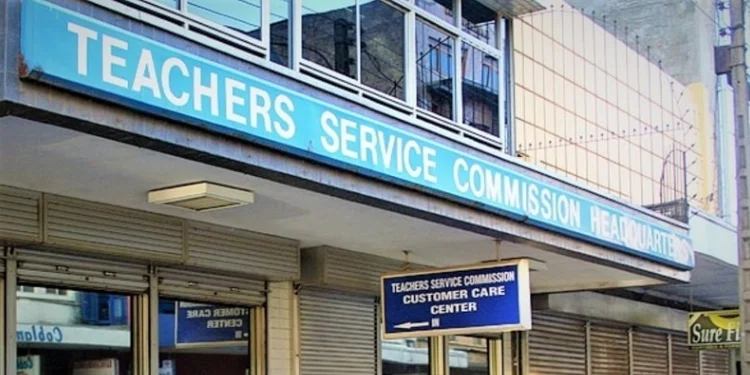
TSC Curriculum Support Officer: Grades, Requirements and Duties Explained (2026).
A Curriculum Support Officer (CSO) is a serving teacher promoted into a supervisory and advisory role, mentoring teachers, monitoring curriculum delivery, and supporting learners with special needs on behalf of the Teachers Service Commission. The cadre has four grades, running from Scale 10 to Scale 13, each with its own minimum service period, academic requirements, and duties.
There are two documents you need to understand to make sense of the CSO pathway. The first is TSC’s Career Progression Guidelines for Curriculum Support Officers, a 2019 policy (published May 2020) that sets the baseline qualifications for each grade.
The second is the annual promotion circular — currently Circular No. 13/2026 — which governs how TSC actually advertises vacancies, shortlists candidates, and scores interviews each financial year. Most articles on this topic only cover the first. This one covers both, because the second is what determines whether you’ll actually get promoted this cycle.
The Four CSO Grades
| Designation | TSC Scale | Minimum Teaching Service (per 2019 CPG) |
|---|---|---|
| Curriculum Support Officer II | Scale 10 | 6 years (entry grade) |
| Curriculum Support Officer I | Scale 11 | 10 years |
| Senior Curriculum Support Officer | Scale 12 | 12 years |
| Chief Curriculum Support Officer | Scale 13 | 15 years |
A note on that first row: TSC’s own guideline document contains an internal inconsistency. Its summary grading table lists 9 years of service against the entry grade, but the detailed requirements section for that same grade — the part that actually spells out appointment criteria — states “served as a teacher for a cumulative period of not less than six (6) years.”
Several independent copies of the guideline reproduce this same contradiction, which suggests it originates in the source document itself rather than in later transcription. For practical purposes, treat six years as the operative minimum for first entry into CSO II, since that is what the detailed requirements section — the part interview panels actually apply — specifies. If you are close to either threshold, it’s worth confirming directly with your Sub-County Director before assuming you don’t qualify.
Requirements for Each Grade
Curriculum Support Officer II (Scale 10) — entry grade
- Cumulative teaching service of at least six years
- A Bachelor’s degree in Education, or a Bachelor’s degree plus a Post Graduate Diploma in Education, from a recognised institution
- A certificate in computer applications
- Demonstrated merit and ability, reflected in work performance and TPAD results
- Compliance with Chapter Six of the Constitution (leadership and integrity)
Curriculum Support Officer I (Scale 11)
- At least 10 years of teaching service
- The same first-degree requirement as above
- A Master’s degree in Education or Special Education from a recognised institution
- Certificate in computer applications
- Chapter Six compliance and demonstrated merit
- Attendance at a management course lasting at least two weeks
Senior Curriculum Support Officer (Scale 12)
- At least 12 years of teaching service
- Same degree, master’s, computer certificate, Chapter Six and merit requirements as CSO I
- Management course of at least two weeks
Chief Curriculum Support Officer (Scale 13) — apex grade
- At least 15 years of teaching service
- Same degree, master’s, computer certificate, Chapter Six and merit requirements
- Management course of at least two weeks
Read Also: TSC Wealth Declaration: What Kenyan Teachers Need to Know
Notice the pattern: a master’s degree becomes compulsory from CSO I upward, while the entry grade accepts a bachelor’s degree (with or without a Postgraduate Diploma in Education). Management training is required from CSO I upward but not at the entry point. Recognised qualifications, per the guideline, must come from accredited universities, KNEC, Kenya School of Government, or institutions approved for Teacher Professional Development (TPD).
What CSOs Actually Do at Each Grade
The role shifts from hands-on delivery at entry level to coordination at senior level.
CSO II (entry level) duties are direct and frontline: visiting schools to observe lessons and give demonstrations, collecting enrolment and staffing data, identifying teachers’ training needs, supporting curriculum implementation, running seminars and workshops with the sub-county director, assisting with Teacher Performance Appraisal and Development (TPAD), identifying and placing learners with special needs, and mentoring teachers directly.
CSO I duties largely mirror the entry grade but are carried out with more independence, reflecting the officer’s added experience and postgraduate training.
Senior CSO and Chief CSO duties pivot toward coordination rather than execution: coordinating (rather than personally running) data collection, training needs assessments, and resource acquisition; carrying out formal Performance Appraisal of staff below them — a supervisory function the two junior grades don’t have; and taking wider responsibility for Special Needs Education compliance and staffing advice across their jurisdiction.
Three threads run through every grade regardless of seniority: mentoring and coaching teachers, supporting Special Needs Education delivery, and working alongside Quality Assurance and Standards Officers. TSC treats curriculum support and quality assurance as complementary functions, not competing ones.
How CSO Appointment and Promotion Actually Work in 2026/2027
This is the part most guides on this topic skip, and it matters more than the 2019 baseline requirements for anyone applying right now.
On 24 July 2026, TSC issued Circular No. 13/2026, the “Guidelines on Promotion of Teachers – 2026/2027 Financial Year,” which governs all promotions — including CSO grades — until 30 June 2027. It doesn’t replace the 2019 Career Progression Guidelines; it operationalises them into an annual, competitive, interview-based process.
Eligibility to apply this cycle:
- At least three years of continuous service in your current grade (not three years total teaching — three years in your present job group)
- A clean disciplinary record, per Regulation 77 of the Code of Regulations for Teachers (2015)
- Re-employed teachers need at least three years of continuous service since re-employment (Regulation 78)
How the process runs: TSC identifies available posts based on budget and vacancy data, advertises them exclusively through the Teachers Online Services (TOS) portal — no paper applications are accepted — and keeps the application window open for 14 days. Candidates are shortlisted at a ratio of three applicants per vacancy.
Read Also; TSC ICT Training Reimbursement Delay: Why JSS Teachers Haven’t Been Paid, and What Happens Next
CSO interviews (both Regular and SNE tracks) are conducted by Regional Selection Panels, the same tier that interviews principals and TTC administrators, reflecting the seniority TSC attaches to the cadre.
The August 2026 vacancies: Under this circular, TSC advertised CSO II (Regular & SNE) and CSO I (Regular & SNE) posts, closing 10–18 August 2026. The stated minimum eligibility for these specific adverts was three years served in the immediately preceding grade — for CSO II, that meant three years as Senior Master IV, Senior Master IV-JSS, or Deputy Head Teacher II at Scale 9 (C4); for CSO I, three years already served as CSO II at Scale 10.
The Interview Scoring Rubric — What Actually Gets You Promoted
Unlike most administrative grades under Circular 13/2026, CSO interviews carry no TPAD component and no administrative-responsibility score. Instead, scoring is dominated by qualifications, time served in grade, and age.
Curriculum Support Officer II (Scale 10) — 100 marks total
| Area | Marks |
|---|---|
| Academic qualifications (PhD: 5, Master’s: 4, Degree: 3) | 5 |
| Length of stay in current grade (7+ yrs: 35, down to 3 yrs: 15) | 35 |
| TPAD performance (81%+: 20, down to 1–20%: 4) | 20 |
| Age (57+: 35, down to ≤41: 15) | 35 |
| Certificate in Computer Applications | 5 |
Curriculum Support Officer I (Scale 11 and 12 adverts) — 100 marks total
| Area | Marks |
|---|---|
| Academic qualifications (PhD: 5, Master’s: 4, Degree: 3) | 5 |
| Length of stay in current grade (7+ yrs: 40, down to 3 yrs: 20) | 40 |
| Age (57+: 45, down to ≤41: 25) | 45 |
| Management/leadership course completed (5+ weeks: 5, 2 weeks: 2) | 5 |
| Certificate in Computer Applications | 5 |
Read Also: TSC Names 16,071 Teachers for World Teachers’ Day 2026 Awards
Two things stand out. First, age is heavily weighted — up to 45 marks at CSO I level — which favours longer-serving, older applicants over younger ones with stronger paper qualifications alone. Second, length of stay in your current grade counts far more than your total years of teaching; a teacher who has spent seven-plus years at Senior Master IV before applying for CSO II scores better on this line than one who reached the same starting point faster.
Each panel member scores independently; your final mark is the average of all panellists’ scores, summed across categories.
A Practical Roadmap
If you’re a serving teacher planning toward this cadre, the sequence that actually matters is:
- Build up six years of cumulative teaching service and hold (or complete) a Bachelor’s degree in Education, or a degree plus PGDE.
- Get a certificate in computer applications early — it’s required at every grade and cheap to obtain relative to everything else on this list.
- Once at CSO II, start a Master’s degree in Education or Special Needs Education if you intend to progress beyond entry level; it’s compulsory from CSO I upward.
- Attend a management course of at least two weeks once you’re aiming for CSO I or above.
- Keep your TPAD ratings strong and your disciplinary record clean — Regulation 77 can lock you out of an entire promotion cycle over an unresolved disciplinary matter.
- Once you’re within three years of your current grade’s minimum, monitor the TSC website and the TOS portal closely; the application window under the current circular is only 14 days, and a missed window means waiting for the next advertised cycle.
Common Mistakes to Avoid
- Assuming total teaching experience is what counts for promotion scoring. Under Circular 13/2026, it’s length of stay in your current grade, not cumulative career service, that carries the heaviest weight for CSO II and CSO I.
- Missing the 14-day application window. Manual or late submissions are not accepted under the current guidelines.
- Letting a disciplinary matter sit unresolved. Regulation 77 can disqualify you even if you otherwise meet every academic and service requirement.
- Delaying the master’s degree. Because it’s compulsory from CSO I upward and takes years to complete, starting it only after reaching CSO II often costs a promotion cycle.
- Ignoring the 30-day acceptance rule. Under Regulation 81, a promotion offer lapses if not accepted within 30 days of issue.
Read Also: Why Some Teachers Don’t Get Promoted Even After Meeting TSC’s CPG Requirements
Frequently Asked Questions
Is a master’s degree required to become a Curriculum Support Officer?
Not for the entry grade, CSO II. A bachelor’s degree in Education (or a bachelor’s degree plus PGDE) is sufficient there. A master’s in Education or Special Needs Education becomes compulsory from CSO I upward.
Can I apply for CSO II with six years of teaching experience, or do I need nine?
TSC’s own guideline document is inconsistent on this point — its summary table says nine years, but its detailed requirements section says six. Six years is the figure specified where appointment criteria are actually laid out, so treat that as the practical minimum, while confirming your specific case with your Sub-County Director.
How is CSO promotion actually decided — by years of service or by interview score?
Both, but through TSC’s structured interview process rather than automatic progression. Meeting the minimum service and qualification thresholds makes you eligible to apply; a Regional Selection Panel then scores you against a 100-mark rubric weighted toward length of stay in grade, age, and qualifications.
Do CSO promotions happen every year?
Only when TSC advertises vacancies, which depends on budget allocation and staff attrition within the approved establishment — promotions are not automatic or guaranteed annually.
What’s the difference between CSO Regular and CSO SNE tracks?
Both exist at each grade and carry the same scoring rubric and general requirements; the SNE track is for officers whose curriculum support role centres on Special Needs Education institutions and learners specifically.
TSC Curriculum Support Officer: Grades, Requirements and Duties Explained (2026).
Follow Teachers Updates on Facebook, LinkedIn, X (Twitter), WhatsApp, Telegram, and Instagram. Get in touch with our editors at hello@teachersupdates.news.
