

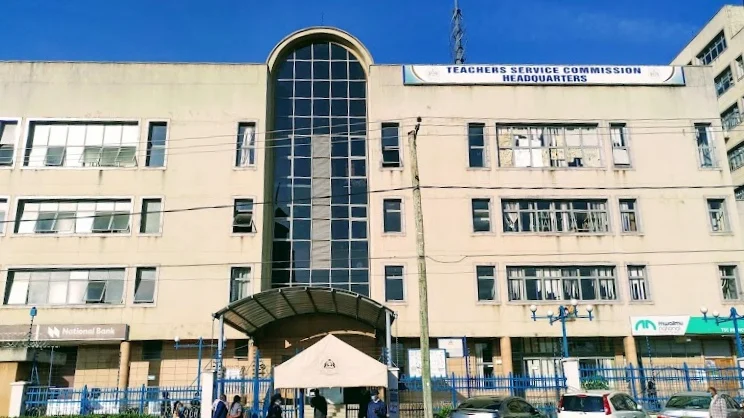
TSC teacher promotion not automatic.
Serving three years in your current grade does not automatically move you to the next one. That surprises many teachers, because the Career Progression Guidelines (CPG) read like an entitlement: hit the years-of-service mark, and promotion follows.
In practice, the Teachers Service Commission (TSC) has repeatedly clarified that meeting the CPG’s eligibility criteria only makes you eligible — it does not guarantee a promotion. Whether you actually move up depends on funded vacancies, a competitive scoring process, and, increasingly, a disciplinary and performance record that can disqualify you even after three qualifying years.
This gap between “eligible” and “promoted” is the single biggest source of frustration among B5, C1 and C2 teachers today. Here’s what actually determines promotion, what’s changing under the new 2026 CPG, and what you should check before assuming you’ve been overlooked.
The Short Answer
Promotion under TSC has always rested on three separate conditions, and all three must align:
- You meet the eligibility criteria — minimum years in grade, a valid TPAD (Teacher Performance Appraisal and Development) rating, a clean disciplinary record, and relevant qualifications.
- A funded vacancy exists in the approved establishment for your grade and subject area.
- You score competitively against other eligible teachers where the number of applicants exceeds the number of funded slots.
Meeting the first condition alone satisfies the CPG on paper. It does not satisfy conditions two and three — and those two are where most teachers get stuck.
Why TSC Says Promotions Aren’t Automatic
Acting TSC Chief Executive Officer Evaleen Mitei has addressed this directly on more than one occasion in 2026. Responding to teachers who expected that a strong year of TPAD scores should translate into consecutive annual promotions, she explained that promotion depends on funding availability, not merely on performance in a given year — and that a good appraisal one year does not create an automatic right to promotion the next.
The numbers back up her point. TSC told the National Assembly’s Constitutional Implementation Oversight Committee that it needed roughly Sh3 billion to clear a backlog of nearly 179,000 teachers eligible for promotion, but received far less over consecutive financial years.
Read Also: TSC Names 16,071 Teachers for World Teachers’ Day 2026 Awards
By the 2026/2027 financial year, the promotion budget had doubled to KSh 2 billion — funding the promotion of 34,016 teachers, according to Mitei’s August 2026 briefing. That figure is a fraction of the total pool of teachers who have already served the required three years in grade.
This is the practical reason automatic movement from B5 to C1, or C1 to C2, has rarely worked as the 2018 CPG text implied. The guideline sets the rule; the Treasury allocation sets the reality.
The 2026/27 Promotion Cycle: What Changed
On September 8, 2026, TSC issued updated guidelines and standardised scoring sheets governing the 2026/27 promotion cycle, replacing the approach used in 2025/26. This is the framework currently in force for anyone applying for promotion this financial year, and it changes the calculus in several important ways.
What stayed the same:
- Minimum three years of continuous service in your current grade
- Re-employed teachers must also complete three years before becoming eligible
- Satisfactory conduct and performance remain baseline requirements
What changed:
| Area | 2025/26 cycle | 2026/27 cycle |
|---|---|---|
| Scoring emphasis | Favoured age, seniority and accumulated years of experience | Shifts weight toward structured career progression and standardised assessment |
| Who benefited most | Teachers aged 57+ scored highest under experience-heavy criteria | More balanced scoring across career stages |
| Scoring tools | 32 separate grade-specific scoring guides | Consolidated, standardised score sheets |
| Disciplinary rule | General “clean record” requirement | Explicit application of Regulation 77, Code of Regulations for Teachers (2015) |
| Application process | Manual/paper-based in many stations | Electronic applications, submitted within a 14-day window |
The disciplinary provision deserves particular attention, because it is a concrete reason teachers who otherwise meet the CPG’s time-in-grade requirement can still be locked out:
- Teachers found guilty through a disciplinary proceeding must wait two years from the date of the finding before becoming eligible again.
- Teachers issued an administrative warning must wait one year.
Read Also: TSC ICT Training Reimbursement Delay: Why JSS Teachers Haven’t Been Paid, and What Happens Next
If you served your three years but picked up a warning or disciplinary finding partway through that period, you may meet the tenure requirement on paper while remaining ineligible under Regulation 77. This is one of the most common — and least discussed — reasons teachers get bypassed despite appearing qualified.
Beyond scoring and discipline, TSC has been explicit that even after all eligibility boxes are ticked, actual promotion still depends on budget allocation, teacher attrition, and the number of funded vacancies within the approved establishment for that cycle.
The New Career Progression Guidelines: A Structural Overhaul
Separately from the annual promotion cycle above, TSC and teachers’ unions have been negotiating a much larger, structural rewrite of the CPG itself — the framework that has governed teacher grading since 2018 (originally drafted in 2016).
On June 18, 2026, TSC signed a memorandum with the Kenya National Union of Teachers (KNUT), the Kenya Union of Post-Primary Education Teachers (KUPPET) and the Kenya Union of Special Needs Education Teachers (KUSNET) covering a proposed new CPG.
TSC Chairperson Jamleck Muturi described it as the product of roughly a year of consultation anchored in the 2025–2029 Collective Bargaining Agreement (CBA), which was itself signed on July 2, 2025, and required TSC to conclude a CPG review by June 30, 2026.
The proposed reforms are significant:
- Replaces the B5–D5 alphabetic job group system with a streamlined Teacher 9 (T9) to Teacher 1 (T1) structure.
- New entry points: P1 certificate holders enter at T9; diploma holders in both primary and secondary schools enter at T8 (reflecting a principle that a diploma should carry the same entry grade regardless of school level); graduate secondary teachers, mostly degree holders, enter at T7.
- Two career tracks: a Classroom Track that lets a teacher reach the highest grade (equivalent to Chief Principal level) purely through teaching excellence, without ever taking an administrative post; and a Leadership/Administration Track for Heads of Department, Deputy Principals and Heads of Institution.
- Faster ceiling: the maximum time to climb from entry grade to the top of the ladder is cut from roughly 30 years to 16–18 years.
- Automatic common-cadre movement from entry grades (T7/T8) up to T6, subject to satisfying performance criteria; progression beyond T6 shifts to a competitive, competency-based model factoring in TPAD scores, additional qualifications (degree, master’s, doctorate), and extra institutional responsibilities.
Read Also; TSC Wealth Declaration: What Kenyan Teachers Need to Know
Where the New CPG Actually Stands Right Now
This is the part readers most need clarity on, because misinformation has circulated. As required by law, any CPG restructuring of this scale must be evaluated by the Salaries and Remuneration Commission (SRC) before it can be implemented, since it redefines job value and remuneration.
In early July 2026, a letter began circulating on social media, purportedly from SRC chairperson Sammy Chepkwony, claiming SRC had rejected the proposed guidelines outright over affordability and fiscal sustainability concerns.
TSC publicly flagged the letter as fake on its official channels, and both The Star’s fact-checking desk and PesaCheck independently confirmed the document was forged. As of that clarification, SRC had not yet issued any official position on the proposed CPG — approval, rejection, or otherwise.
Some secondary outlets reported the forged letter’s contents as genuine news before the fact-check circulated, so if you’ve seen headlines claiming SRC “rejected” the new CPG, treat that claim with caution unless it cites TSC or SRC directly.
What is verifiable is this: the proposal remains with SRC for job evaluation, and the day-to-day 2026/27 promotion cycle described above is proceeding under updated TSC-issued guidelines in the meantime, using the existing grading structure while the larger T9–T1 restructuring awaits approval.
What This Means Practically for You
If you’ve served three years in your current grade and haven’t been promoted, work through this before assuming you’ve been unfairly skipped:
- Check your disciplinary file. A warning or finding under Regulation 77 within the relevant waiting period (one or two years) makes you ineligible regardless of tenure.
- Confirm your TPAD ratings are complete and satisfactory for the review period — an incomplete or unsubmitted appraisal can exclude you from scoring altogether.
- Ask your County Director whether your subject/grade has a funded vacancy in this cycle’s establishment. Eligibility without a funded slot means you’re on the waiting list, not overlooked.
- Watch for the 14-day electronic application window each cycle — missing it under the 2026/27 process can cost you an entire year, even if you’re otherwise eligible.
- Don’t pay anyone for promotion processing. TSC has explicitly dismissed messages asking schools to contribute money toward promotion or recruitment logistics as fake; these exercises are commission-funded.
Frequently Asked Questions
Does meeting three years in grade guarantee promotion?
No. It only makes you eligible to be considered. Actual promotion depends on a funded vacancy and, where demand exceeds supply, a competitive score.
Is the new T9–T1 grading structure already in effect?
Not yet fully. It was signed as a framework agreement with unions in June 2026 and remains subject to SRC job evaluation before formal implementation. The current promotion cycle still uses the existing grade structure.
Why did some teachers with fewer years get promoted before others?
Under the 2026/27 scoring model, criteria beyond raw seniority — including TPAD performance, qualifications and disciplinary record — now carry more weight than under the 2025/26 system, which leaned more heavily on age and accumulated years.
Is it true SRC rejected the new CPG?
The widely shared claim to that effect was traced to a forged letter that TSC publicly dismissed as fake. As of the most recent confirmed reporting, SRC had not issued an official public ruling on the proposal.
How long will it take to reach the top grade under the new framework?
The proposed structure aims to cut the journey from entry grade to the highest classroom or leadership grade from roughly 30 years to 16–18 years, once implemented.
TSC teacher promotion not automatic.
Follow Teachers Updates on Facebook, LinkedIn, X (Twitter), WhatsApp, Telegram, and Instagram. Get in touch with our editors at hello@teachersupdates.news.
