

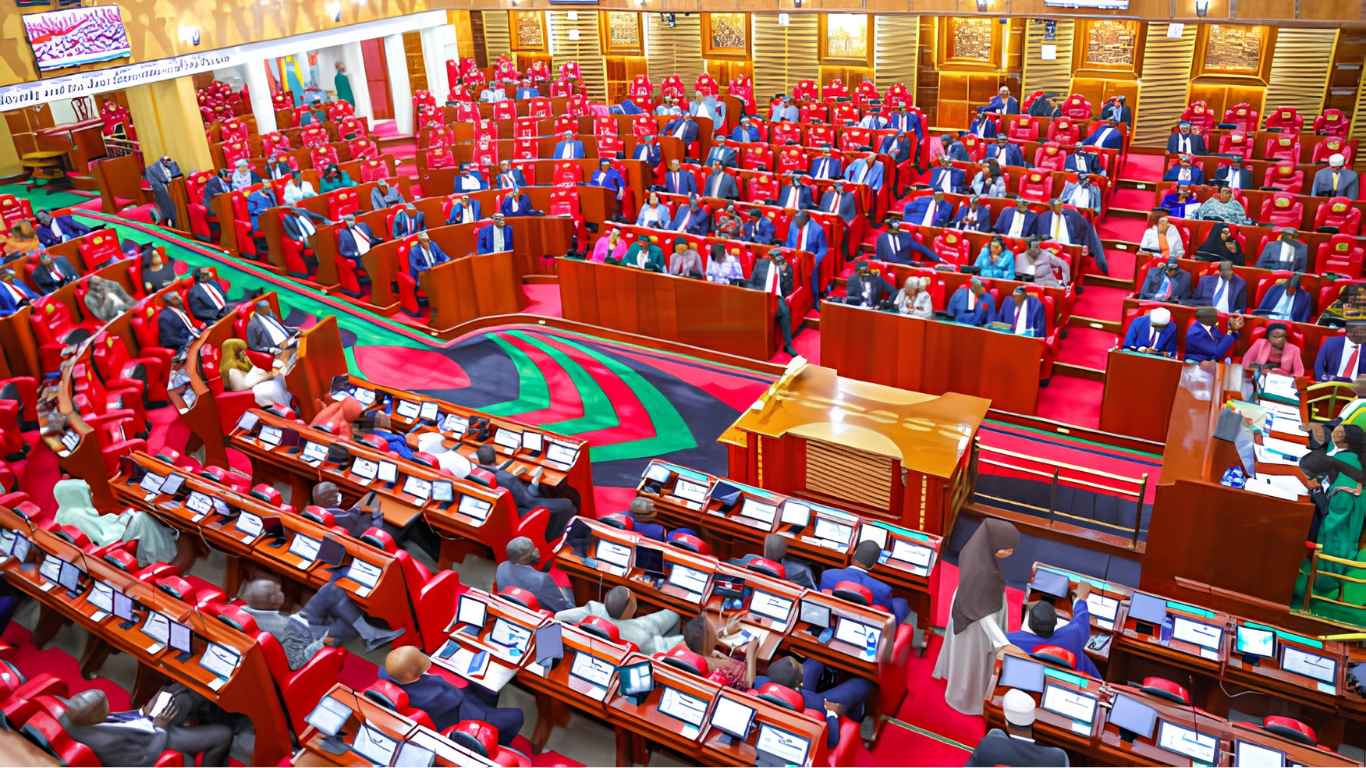
Parliament to Summon Secondary School Principals Over Billions in Public Funds.
Public secondary school principals are set to appear before the National Assembly for the first time to respond to audit queries relating to the management of public funds allocated to learning institutions.
The National Assembly Public Investments Committee on Governance and Education announced that it will commence hearings with principals of Category C1 secondary schools before extending the oversight exercise to Category C2 (Extra County), Category C3 (County) and Category C4 (Day) schools.
The move follows the submission of Auditor-General’s reports covering public secondary schools and is expected to expand parliamentary financial oversight to institutions that manage significant government allocations, school fees and development resources.
Parliamentary Oversight Framework for Secondary Schools
The committee chairperson, Dick Maungu, said the decision was informed by the need to strengthen accountability in public secondary schools, which have historically not appeared before parliamentary oversight committees despite handling substantial financial resources.
Mr Maungu stated that the committee had begun receiving audit reports on secondary schools and had developed a framework that would allow school principals to personally respond to financial queries raised by the Auditor-General.
“We have begun receiving audit reports on secondary schools and very soon we shall be summoning principals of those institutions. These schools oversee huge amounts of public funds, yet they have never appeared before us for oversight,” Mr Maungu said.
The planned hearings will initially target Category C1 schools, formerly classified as national schools, which receive government capitation, collect fees from large student populations and undertake multimillion-shilling infrastructure projects.
Initial List of Category C1 Schools Targeted
The first phase of parliamentary scrutiny will cover Category C1 institutions, including:
- Alliance High School
- Mang’u High School
- Kenya High School
- Nairobi School
- Pangani Girls High School
- Lenana School
- Maranda High School
- Kagumo High School
- St Patrick’s High School Iten
- Maseno School
- Kapsabet Boys High School
- Mama Ngina Girls High School
The number of Category C1 schools has increased to more than 200 following the recategorisation of several Extra County schools during the transition to the Competency-Based Education (CBE) system.
Concerns Over Existing Oversight Gaps
The National Assembly Public Investments Committee on Governance and Education noted that institutions managing smaller financial allocations had previously appeared before parliamentary oversight committees, while secondary schools managing larger budgets had not been subjected to similar scrutiny.
Mr Maungu cited disparities in oversight, noting that some Technical and Vocational Education and Training (TVET) institutions with smaller enrolments and budgets had appeared before committees, while secondary schools serving thousands of learners had not undergone direct parliamentary review.
“Sometimes we examine a TVET institution with about 120 students managing less than Sh10 million, yet a secondary school with more than 2,000 students receives significantly larger amounts of public money without ever appearing before the committee. That is the gap we want to close,” Mr Maungu said.
The committee stated that the hearings would provide an opportunity to establish compliance with public finance regulations and evaluate measures taken by schools to address audit findings.
Audit Findings and Financial Accountability Concerns
The planned parliamentary hearings follow concerns raised in successive Auditor-General’s reports on public institutions, including unsupported expenditure, procurement irregularities, weaknesses in internal controls and inadequate financial accountability mechanisms.
Members of Parliament stated that requiring principals to respond directly to audit queries would strengthen accountability in the utilisation of public resources allocated to secondary schools.
Education Cabinet Secretary Julius Ogamba supported the initiative, stating that enhanced oversight would promote prudent management of resources allocated to schools.
“We welcome this oversight because it will ensure that the resources allocated to our schools are used prudently and for the purposes for which they were intended,” Mr Ogamba said.
Secondary School Funding Challenges
The parliamentary scrutiny comes amid continued financial challenges affecting public secondary schools due to delayed and incomplete government capitation disbursements.
Several schools have reported accumulated debts, delayed payments to suppliers and difficulties in financing essential services, including meals, learning materials and other operational requirements.
Some institutions have also sent learners home over unpaid fees, citing inadequate financial resources.
The government allocation for secondary school learners stands at Sh22,244 annually per learner. However, school administrators have stated that institutions frequently receive less than the allocated amount, resulting in borrowing, postponed projects and increased financial obligations.
Stakeholder Responses
The National Parents Association supported the parliamentary oversight initiative but cautioned against using the hearings to unfairly target school administrators.
Association chairman Silas Obuhatsa stated that accountability in school finances would help restore public confidence in the management of education resources.
“We welcome the move if principals are summoned to explain how public funds are being used. For a long time, we have seen schools sending learners home because they claim they have no money,” Mr Obuhatsa said.
He called on the committee to base its inquiries on verified audit findings and provide principals with an opportunity to respond to allegations where no financial misconduct had occurred.
“The committee should base its inquiries on credible audit findings and evidence where there are concerns about financial management. The process should also give principals an opportunity to clear their names where no wrongdoing has occurred,” Mr Obuhatsa said.
The Kenya Secondary School Heads Association (Kessha) also welcomed the planned hearings, with national chairman Willie Kuria stating that school heads were prepared to account for government allocations received by their institutions.
Mr Kuria, who is also the chief principal of Murang’a High School, said principals would use the hearings to highlight operational challenges affecting schools, particularly delayed capitation payments.
“We have no problem appearing before Parliament if summoned. In fact, we welcome the opportunity because it will also allow us to explain the reality on the ground,” Mr Kuria said.
He added that schools should be assessed alongside the financial constraints caused by incomplete government funding.
“How do we explain spending money that has not been fully disbursed? We have appeared before Parliament before through Kessha to appeal for the release of the capitation deficit. We hope Parliament will also ensure schools receive the funds they are owed. Once the full capitation is remitted, we will gladly account for every shilling,” Mr Kuria said.
Progressive Rollout of Parliamentary Hearings
The National Assembly Public Investments Committee on Governance and Education stated that the oversight exercise will be implemented progressively, beginning with Category C1 schools before expanding to Category C2 (Extra County), Category C3 (County) and Category C4 (Day) schools.
The hearings will require principals of public secondary schools to respond directly to audit observations and account for the management of billions of shillings in public resources allocated to the education sector.
Read Also: Huduma Kenya Clarifies Rules on Changing Parent Details in Birth Certificates
Conclusion
The planned appearance of secondary school principals before the National Assembly represents a new phase of parliamentary oversight in basic education financing.
The exercise will place public secondary schools under a formal accountability framework similar to that applied to public universities, Technical and Vocational Education and Training institutions and teacher training colleges, with school administrators expected to provide responses on financial management, audit compliance and utilisation of public funds.
Parliament to Summon Secondary School Principals Over Billions in Public Funds.
Follow Teachers Updates on Facebook, LinkedIn, X (Twitter), WhatsApp, Telegram, and Instagram. Get in touch with our editors at hello@teachersupdates.news.
