

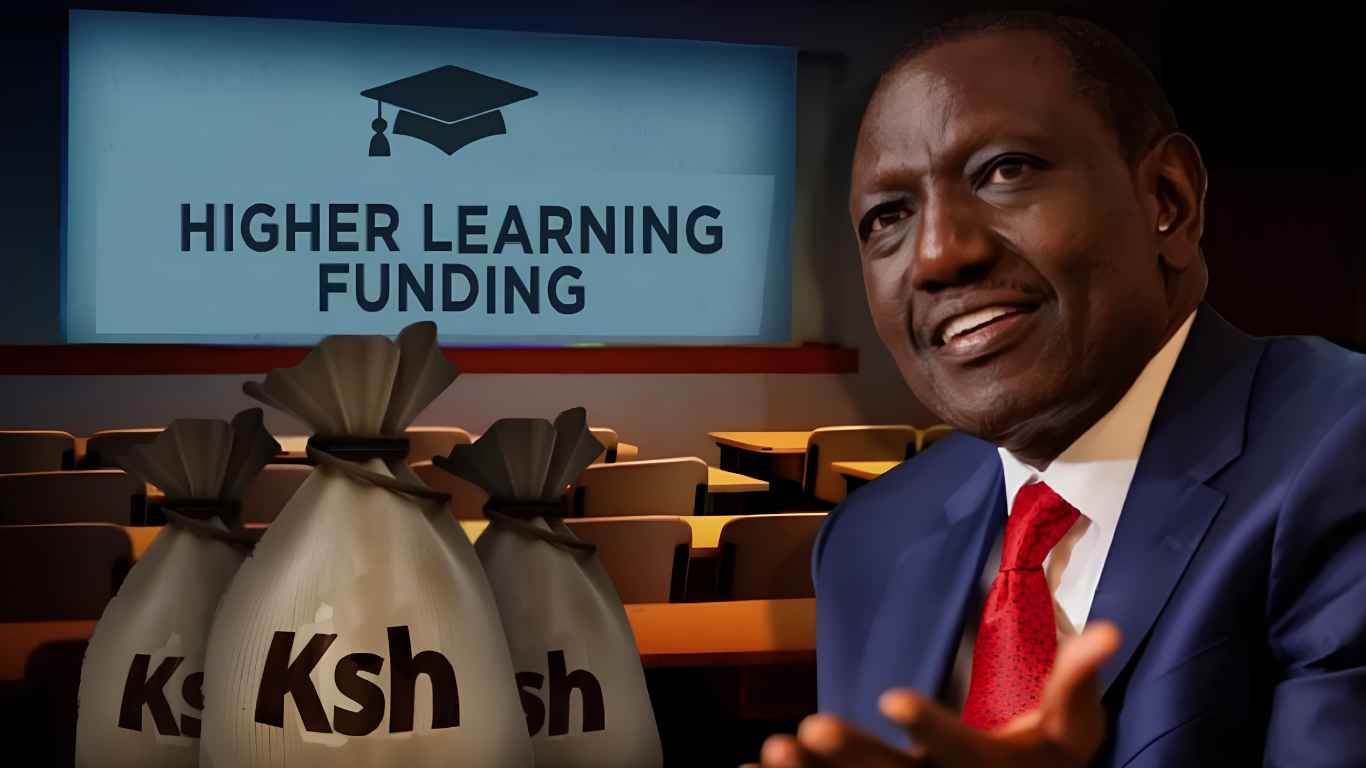
MPs Issue New Directive on University Funding Model After Revealing Sh100 Billion Debt.
The National Assembly Departmental Committee on Education has called for urgent and coordinated interventions to address persistent financing challenges affecting Kenya’s higher education sector.
The committee recommended a joint engagement involving Parliament, the National Treasury and the Ministry of Education to streamline the implementation of the Higher Education Funding Model and address gaps between policy frameworks and budgetary allocations.
The recommendation was made by the committee during a review of the 2025/2026 Budget Implementation Status following separate engagements with officials from the State Department for Higher Education, the Higher Education Loans Board (HELB) and the Universities Fund.
The committee, chaired by Vice Chairperson Eve Obara, raised concerns over the sustainability of university financing, adequacy of budgetary allocations and the increasing accumulation of pending bills by public universities.
Higher Education Funding Model Implementation Challenges
Appearing before the committee, Higher Education Principal Secretary Dr. Beatrice Inyangala stated that the Higher Education Funding Model remains operational but continues to experience implementation challenges arising from inadequate alignment between the funding framework and available budgetary allocations.
“The funding model is functional. However, the main challenge lies in budget alignment,” Dr. Inyangala told Members of the committee.
The Higher Education Funding Model was introduced to provide financial assistance to university students based on assessed levels of need while supporting sustainable financing mechanisms for public universities.
However, implementation of the model has faced challenges relating to affordability, adequacy of financial support and delays in the disbursement of resources to institutions.
Members of the committee observed that inconsistencies between the funding policy and budgetary provisions had affected effective implementation of the model and recommended structured discussions between Parliament, the National Treasury and the Ministry of Education.
The proposed engagement is expected to provide a framework for harmonising funding requirements, budget allocations and institutional financing obligations within the higher education sector.
Public Universities Accumulate Sh100.3 Billion Pending Bills
The committee also sought clarification on the increasing levels of pending bills accumulated by public universities.
Dr. Inyangala informed Members that a significant proportion of the outstanding obligations had been inherited over several years, with institutions continuing efforts to settle the debts despite additional financial pressure caused by accruing interest charges.
According to the State Department for Higher Education, public universities had accumulated pending bills amounting to Sh100.3 billion as of January 2026.
The Ministry of Education stated that universities were implementing measures aimed at reducing outstanding obligations, including prioritising debt settlement, suspending stalled development projects and exploring alternative revenue generation mechanisms.
The measures are intended to limit further accumulation of liabilities and improve financial sustainability within public universities.
HELB Loan Allocation Criteria Under Review
During a separate engagement, Members of the committee questioned officials from the Higher Education Loans Board (HELB) on the criteria used to allocate student loans during periods when available resources are insufficient to meet demand from all eligible applicants.
The HELB delegation was led by Chief Executive Officer Geoffrey Monari.
The committee sought details on how beneficiaries are prioritised when funding constraints affect the ability of the board to provide financial assistance to all qualified applicants.
Read Also: TVET Enrolment Drops: Parliament Calls for More Student Recruitment
Legislators emphasised that the loan allocation process should be based on principles of fairness, transparency and predictability to ensure that eligible students are not disadvantaged due to limited financial resources.
Proposed Stakeholder Engagement
The National Assembly Departmental Committee on Education is expected to facilitate further consultations involving key stakeholders, including Parliament, the National Treasury and the Ministry of Education, to address challenges affecting the implementation of the Higher Education Funding Model.
The discussions will focus on improving coordination between policy objectives, financial allocations and institutional requirements within Kenya’s higher education sector.
MPs Issue New Directive on University Funding Model After Revealing Sh100 Billion Debt.
Follow Teachers Updates on Facebook, LinkedIn, X (Twitter), WhatsApp, Telegram, and Instagram. Get in touch with our editors at hello@teachersupdates.news.
