

Kenya’s New TVET Training Model: What the Industry-Led Reforms Mean.
Kenya’s Ministry of Education is restructuring how Technical and Vocational Education and Training (TVET) institutions train students, shifting away from classroom-heavy instruction toward training delivered inside real workplaces and production environments.
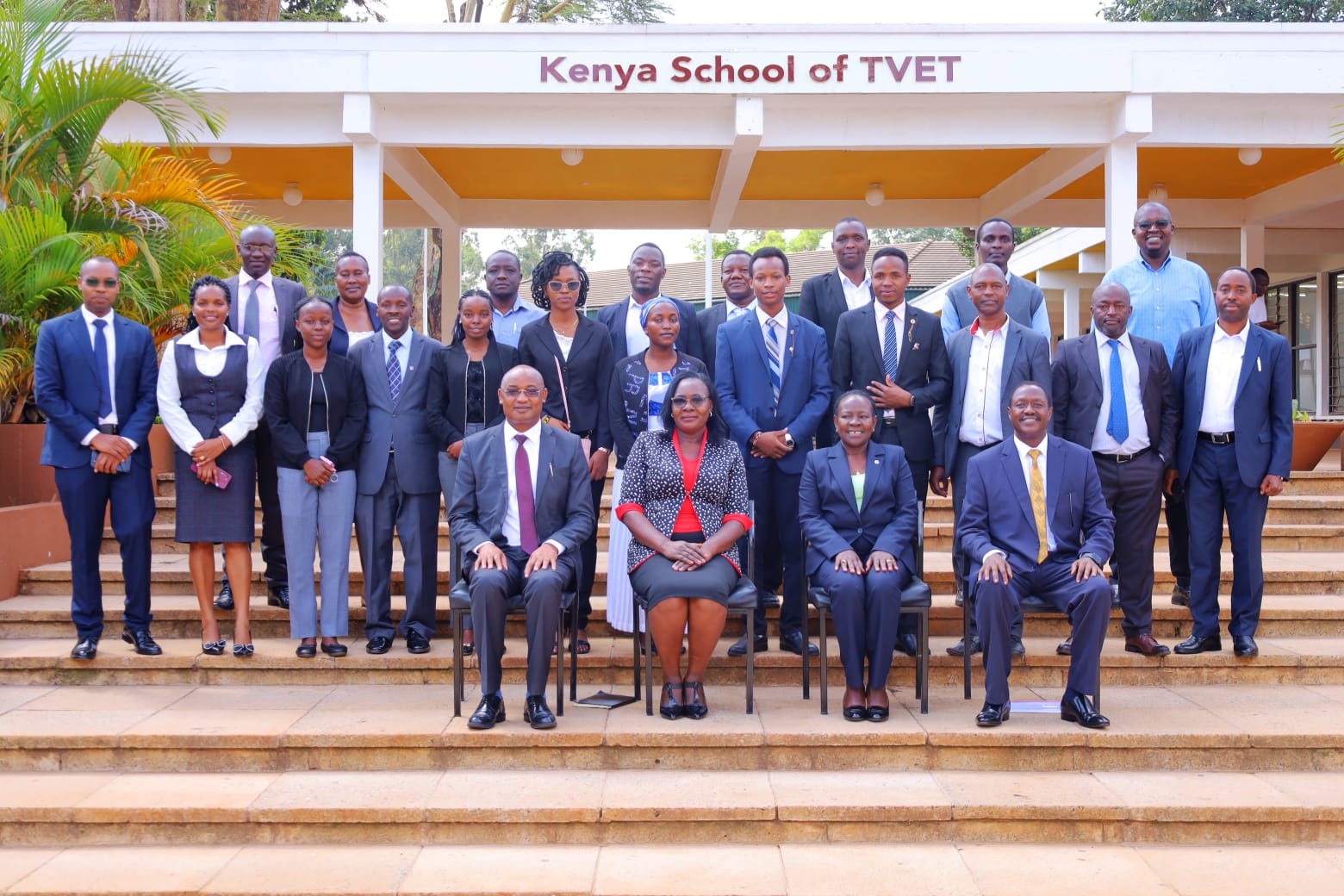
The changes were outlined by Principal Secretary for the State Department for TVET, Dr Esther Thaara Muoria, during the three-day International TVET Conference 2026 in Nairobi.
The reform is built around a model the PS calls “training from industry, with industry, for industry” — meaning companies will have a direct hand in deciding what TVET learners are taught, not just in hiring them afterward.
What Is Actually Changing
Under the new approach, employers move from being end-users of TVET graduates to active partners in producing them. In practice, this means:
- Companies help shape curriculum content, not just review it after the fact
- Learners get more hands-on time on real equipment, inside actual production settings, rather than simulated classroom exercises
- Institutions are expected to run production and service activities themselves — not just teach about them
- Training, innovation and even product/service delivery become shared functions between colleges and industry
Dr Muoria described the intent behind the shift directly: “This is about bringing industry into our institutions so that our learners train in environments that reflect the realities of the workplace.”
The Dual Training Policy: How It Fits In
Central to this approach is Kenya’s Dual Training Policy, approved in January 2025. Dual training splits a learner’s time between an institution and an actual workplace, so trainees are learning theory and practising it on the job in parallel — rather than finishing a full classroom course before ever setting foot in a workplace.
According to Muoria, dual training has already reached more than 15,000 young people. Germany’s Deputy Ambassador to Kenya, Konrad Lax, gave a more specific breakdown at the same conference: about 15,000 TVET students across 120 institutions are training in partnership with roughly 1,500 industry partners under Germany-linked dual training arrangements, giving learners direct exposure to workplace equipment and expertise.
Germany’s own dual training system — where students split time between vocational school and a company — is one of the models Kenya’s reform draws on. Lax urged Kenyan companies to become what he called “architects of training,” arguing that industry, not government, is best positioned to know where technology and skills demand are heading.
Read Also: Careers Related to Social Studies in Kenya: A Practical Guide
Government Figures on the Reform (As Reported by the Ministry)
Speaking at the conference, Dr Muoria cited the following figures on the state of TVET in Kenya. These are the Ministry’s own reported numbers, presented here as attributed statements rather than independently verified statistics:
| Metric | Figure cited by PS Muoria |
|---|---|
| National polytechnics | 33 |
| Technical and vocational colleges | 217 |
| Trainers trained in competency-based training | 11,600 |
| Modularised curricula developed or reviewed | About 300 |
| Curricula with green competencies incorporated | 86 |
| Companies engaged with TVET institutions | More than 2,500 |
| Learners who have benefited from dual training | More than 15,000 |
If you’re citing these numbers elsewhere, treat them as government-reported figures as of the 2026 conference rather than confirmed audited statistics, since they weren’t cross-checked against a published Ministry or TVET Authority report for this article.
Industrial Partners: Finland, Germany, South Korea and KOICA
Kenya’s TVET reform is receiving significant international backing. Muoria said Finland, Germany and South Korea had jointly committed about €28 million to the sector, with the Korea International Cooperation Agency (KOICA) providing additional support for infrastructure, equipment and technical expertise.
Each partner brought a distinct angle to the conference:
South Korea. Ambassador Kang Hyung-shik pointed to Korea’s own economic transformation as proof that investment in technical education and research fuels industrial growth. Korea is working with Kenya through KOICA and the National Industrial Training Authority (NITA), with a focus on infrastructure and manufacturing skills. “Connecting TVET with investment and job creation is very critical and vital,” Kang said, calling on Korean businesses to deepen industrial partnerships in Kenya.
Finland. Ambassador Riina-Riikka Heikka emphasised training quality, private-sector participation and inclusion. Finland is supporting Kenya through the Promotion of Youth Employment and Vocational Training programme — jointly funded with Germany and implemented by GIZ alongside the State Department for TVET. Heikka also pushed for wider participation of women and persons with disabilities in technical training, noting that social attitudes still limit access to certain trades.
Read Also: TSC Number Application: Requirements, Fees and Process
Germany. Beyond dual training support, Germany and Kenya are implementing the Kenya-Germany Migration and Mobility Partnership. Muoria said this is expected to enable skills transfer through labour mobility while keeping recruitment “safe, ethical and transparent” — language typically used to distinguish government-backed labour migration pathways from exploitative recruitment practices.
HELB and Universities Fund: A Related but Separate Deadline
Alongside the TVET reforms, the Ministry has extended the application deadline for government funding for first-time university students and TVET trainees to September 21, 2026.
Education Cabinet Secretary Julius Ogamba directed the Universities Fund and the Higher Education Loans Board (HELB) to reopen the window after some eligible students and trainees reportedly missed the original cutoff.
This is a separate administrative matter from the industry-training reforms, but it affects the same population — new TVET entrants who need funding confirmed before they can enrol.
If you’re a first-time applicant, or advising one, the practical takeaway is straightforward: confirm your application status with HELB or the Universities Fund directly rather than assuming you’ve missed out, since the window has been reopened.
Read Also: TSC Denies Fake Circular Halting JSS Teacher Deployment
What This Means for TVET Students, Trainers and Parents
For someone deciding whether to enrol in a TVET programme, or already training, the direction of travel matters more than any single figure:
- More workplace time. Expect a growing share of practical training to happen inside actual companies, not just college workshops.
- Curriculum shaped by employers. Skills taught are being aligned more tightly to what companies say they need, which should, in theory, improve job-readiness at graduation.
- Dual training is expanding. If your institution has a dual training arrangement with an industry partner, it’s worth asking how to get onto that track specifically, since it combines a stipend/workplace exposure with formal study.
- Green skills are being built in. With green competencies already incorporated into dozens of curricula, expect this to keep expanding across more technical fields.
- International funding is flowing into infrastructure and equipment, particularly through Germany, Finland, South Korea and KOICA — which over time should mean better-equipped workshops in the institutions these partnerships touch.
Frequently Asked Questions
What does “training from industry, with industry, for industry” actually mean? It’s the Ministry’s shorthand for a model where companies help design what’s taught (curriculum development), participate in delivering the training itself, and are the intended destination for graduates — rather than being consulted only after a curriculum is already finalised.
Is dual training available at every TVET institution? No. Dual training depends on an institution having an established partnership with industry. Not every polytechnic or technical college currently runs a dual training track, though the government has said it intends to expand the model.
Does the HELB/Universities Fund deadline extension apply to all TVET trainees? It applies specifically to first-time applicants for government funding at university and TVET level who missed the original deadline. Continuing students and those who already applied on time should check directly with HELB or the Universities Fund on their specific status.
When was the Dual Training Policy approved? January 2025.
Who is funding Kenya’s TVET reforms internationally? Finland, Germany and South Korea have jointly committed roughly €28 million, with additional support from KOICA (Korea) for infrastructure, equipment and technical expertise.
Read Also: How to Check Your TSC Employment Status Online
Follow Teachers Updates on Facebook, LinkedIn, X (Twitter), WhatsApp, Telegram, and Instagram. Get in touch with our editors at hello@teachersupdates.news.
