

TSC Junior School Teacher Deployment: Who Qualifies and What Happens Next.
The Teachers Service Commission (TSC) has cleared 866 of the 1,541 primary school teachers who applied to move into Junior School (JSS) teaching positions.
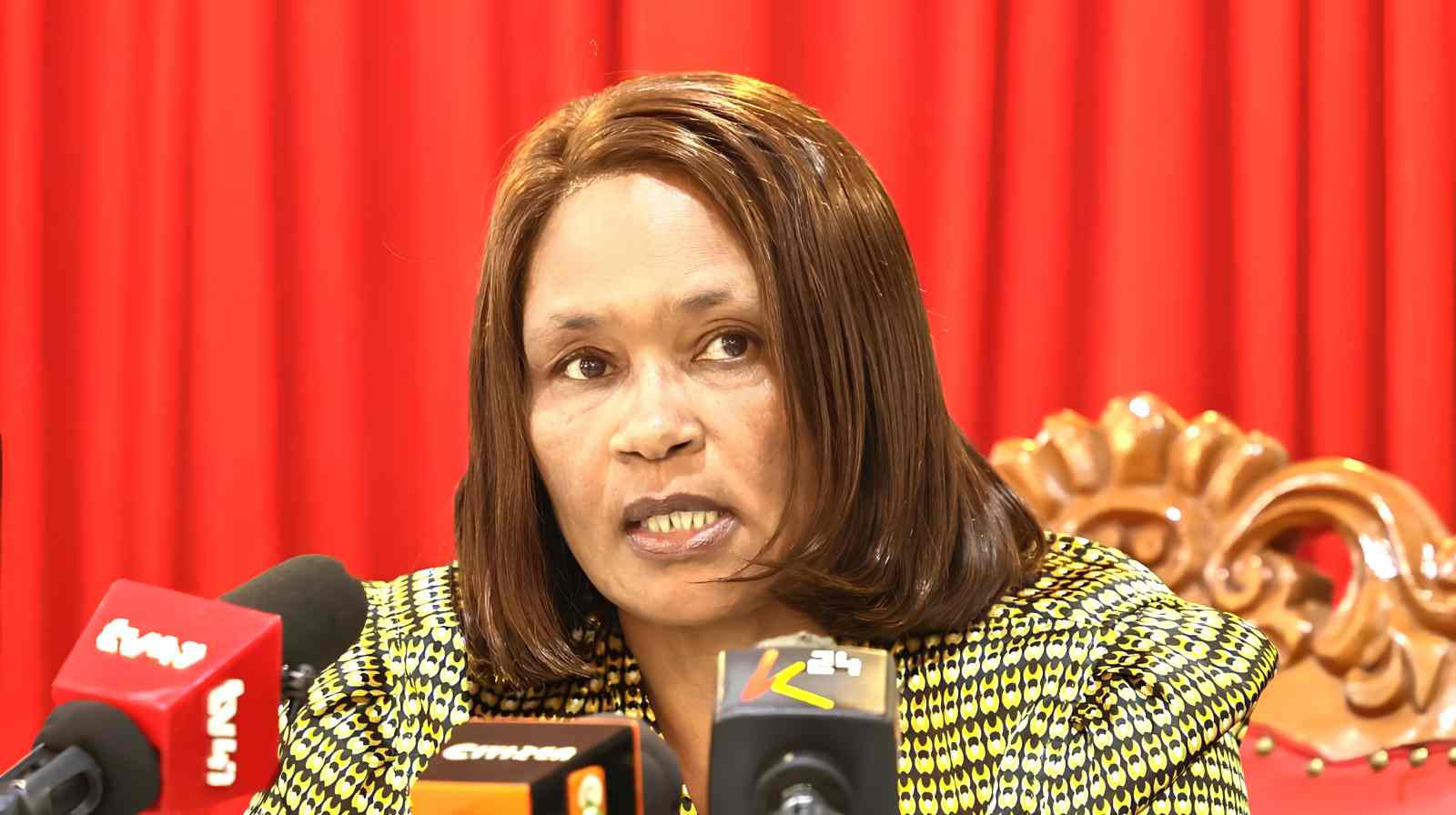
The clearance, contained in an internal memo from Acting Commission Secretary and CEO Dr. Evaleen J. Mitei, means those 866 teachers now move to a second, stricter round of vetting at the county and sub-county level before they receive actual posting instructions.
If you’re a primary school teacher wondering whether you qualify, what happens after clearance, or whether the deployment programme is even still running, here’s what you need to know.
The numbers: what TSC actually announced
TSC received 1,541 applications from primary school teachers who wanted to transition into Junior Schools. County and sub-county officers reviewed the applications and validated 866 of them as meeting the academic and professional requirements for deployment.
Being on the validated list is not the same as being posted. The Commission has instructed regional, county and sub-county directors to carry out a further round of document verification before issuing actual deployment letters, and posting will follow staffing needs at individual schools rather than happen all at once.
This is a recurring exercise, not a one-off. TSC has run similar rounds before — in an earlier cycle, the Commission validated 1,436 teachers out of 3,718 applicants for the same kind of transition.
The current batch of 866 is smaller in absolute numbers but reflects the same ongoing mechanism the Commission uses to move qualified primary teachers into JSS classrooms as staffing gaps allow.
Is the JSS deployment programme still active? (Yes — despite a fake circular)
This question matters right now because of confusion that spread in early September 2026. A circular dated 8 September 2026, falsely numbered as Circular No. 18/2026 and falsely attributed to Dr. Mitei, claimed TSC had immediately halted all deployment of primary teachers to junior and secondary schools and cancelled pending applications and vetting.
TSC confirmed on 10 September 2026 that the document was fabricated and did not originate from the Commission, stamping copies “FAKE” and urging teachers to rely only on its official channels.
The Commission’s online application portal for primary-to-JSS deployment remained open throughout, and the 866-teacher clearance described in this article was itself processed and announced around the same period — direct evidence that the programme continued uninterrupted.
If you see circulars, screenshots or WhatsApp forwards claiming TSC has scrapped this pathway, treat them with caution and verify against TSC’s official website or verified social media accounts before acting on them.
Read Also: TSC Reforms Under Eveleen Mitei What Has Actually Changed in 2026
Who qualifies for JSS deployment
To be considered, you must first be a registered, actively serving primary school teacher with a clean disciplinary record — not under interdiction or facing disciplinary proceedings — and you must have formally expressed interest in JSS deployment with your name appearing on TSC’s approved applicant list.
Beyond that, academic qualification is assessed under one of three pathways:
| Pathway | Requirement |
|---|---|
| Diploma holders | Diploma in Education, minimum KCSE mean grade of C+, with C+ in two teaching subjects currently offered under 8-4-4 or the Competency-Based Curriculum (or two principal passes and one subsidiary at A-Level) |
| Diploma + Degree holders | KCSE mean grade of C (plain), combined with both a Diploma in Education and a Bachelor’s degree in Education |
| Bridging-course graduates | KCSE mean grade of C (plain), who completed a pre-university bridging course before 31 December 2015, with C+ or above in two teaching subjects |
Not eligible: Holders of a Bachelor of Education (Primary Option) do not qualify for JSS deployment under this framework, regardless of their KCSE grade, because that qualification is designed for primary-level teaching rather than the subject-specialisation model used at Junior School.
A qualification change worth knowing about
The criteria above reflect TSC’s standard deployment framework, and they match what was applied to the 866-teacher batch. However, it’s worth knowing that TSC has been actively relaxing entry requirements for a related group of teachers.
In May 2026, the Commission held public participation on proposed amendments to Regulation 20 of the Code of Regulations for Teachers, and by September 2026 confirmed it had lowered the minimum threshold to a KCSE mean grade of C (plain) for primary teachers holding secondary-option Bachelor’s degrees, provided they scored at least C+ in one teaching subject — down from the previous requirement of an overall C+ with C+ in two subjects. A parallel relaxation applies to secondary-option diploma holders.
This reform targets teachers who hold degrees or diplomas meant for secondary-level teaching but were stuck below the old grade threshold. If your qualification is a secondary-option degree or diploma rather than a primary-teaching one, it’s worth checking with your county TSC office whether the relaxed criteria apply to your specific case, since eligibility rules have shifted more than once in a short period.
Read Also: HELB First-Year Funding Delays 2026: What’s Happening Now
Documents you’ll need for vetting
Teachers on the validated list should be ready to present original documents plus certified copies during the county/sub-county verification stage:
- Degree or diploma certificate
- Academic transcripts
- KCSE certificate (or its recognised equivalent)
- Special Needs Education (SNE) qualification certificate, where applicable
- Current payslip
- A signed declaration from your head of institution confirming you are actively serving and are not under interdiction or disciplinary proceedings
Incomplete or uncertified documentation is the most common reason validated applicants stall at this stage, so gather everything before your scheduled vetting date rather than after.
How TSC decides where you’re posted
Deployment isn’t random. TSC directors are guided by several factors when matching a cleared teacher to an actual JSS vacancy:
- Proximity to the teacher’s current station is considered as much as possible
- Subject combination must match what the receiving Junior School actually needs
- Gender balance at the receiving institution is a factor directors are told to weigh
- SNE qualifications — teachers with Special Needs Education training are directed toward Special Junior Schools specifically
All of this is processed digitally. TSC has stated it no longer accepts or processes hard-copy casualty returns for posting, entry or exit — everything runs through its online Posting, Entry/Exit Reports Module, accessible via the Commission’s official online services portal alongside the separate application platform used for the JSS deployment exercise itself.
Appointment grade changes: what moving to JSS does to your salary grade
One of the more practical parts of any deployment memo is how it affects your TSC grade, since JSS positions carry different grading from primary posts. Based on the current memo:
| Current status | New appointment |
|---|---|
| Grade B5, holding a Bachelor’s degree | Appointed to Grade C2 |
| Grade B5, holding a Diploma in Education | Appointed to Grade C1 |
| Grade C2, Bachelor’s degree, promoted on or before 30 September 2023 | Appointed to Grade C3 |
| Grade C1, Diploma in Education, promoted on or before 30 September 2023 | Appointed to Grade C2 |
It’s worth noting that TSC’s grade-progression cut-off date has moved between deployment cycles before — an earlier circular used 31 August 2022 as the relevant cut-off for similar grade upgrades. If your promotion date sits close to any of these thresholds, confirm the exact cut-off applied to your specific batch with your sub-county director rather than assuming the date stays fixed across every round.
Deployment vs. recruitment: don’t confuse the two
If you’re a primary teacher without the qualifications above, you’re not necessarily shut out of Junior School altogether — you may fall under a different TSC pathway.
In August 2026, separately from this deployment exercise, TSC opened applications for 20,000 permanent and pensionable Junior School teaching posts under a fresh recruitment drive tied to Competency-Based Education staffing needs, with applications accepted online only.
That is new hiring against advertised vacancies, open to any qualified candidate, not an internal transition for already-serving primary teachers. Deployment, by contrast, only reassigns teachers already on TSC’s payroll who applied through this specific internal process. Understanding which pathway you fall under matters, because the eligibility rules, application channel and timelines differ.
The broader driver behind both efforts is a persistent staffing gap: JSS classrooms nationally have needed roughly 149,000 teachers against a workforce that has, in past assessments, covered only about half to two-thirds of that requirement. That gap is why TSC continues to run overlapping deployment and recruitment exercises rather than a single, one-time fix.
Frequently Asked Questions
Does being on the validated list guarantee I’ll be posted to a Junior School?
No. Validation means you’ve passed the academic and eligibility check. You still need to clear the second round of document vetting at county/sub-county level, and actual posting depends on where staffing gaps exist and how well your subject combination and location match available vacancies.
I hold a Bachelor of Education (Primary Option). Can I apply for JSS deployment?
No. This qualification is explicitly excluded from the JSS deployment pathway, regardless of your KCSE grade.
Can I still apply if I missed this particular application round?
TSC has run this exercise more than once, with earlier rounds validating over 1,400 teachers from a larger applicant pool. Watch TSC’s official online services portal and verified communication channels for the next application window, since rounds open periodically rather than continuously.
Is it true TSC has stopped deploying primary teachers to JSS?
No. A fake circular claiming this circulated in September 2026, but TSC confirmed it was fraudulent and that the deployment portal and exercise remain active.
What’s the difference between this deployment and the 20,000-post recruitment drive?
Deployment moves already-serving, qualified primary teachers internally into JSS roles. The 20,000-post drive is separate, open recruitment against newly advertised vacancies, and follows its own application process and timeline.
TSC Junior School Teacher Deployment: Who Qualifies and What Happens Next
Follow Teachers Updates on Facebook, LinkedIn, X (Twitter), WhatsApp, Telegram, and Instagram. Get in touch with our editors at hello@teachersupdates.news.
