

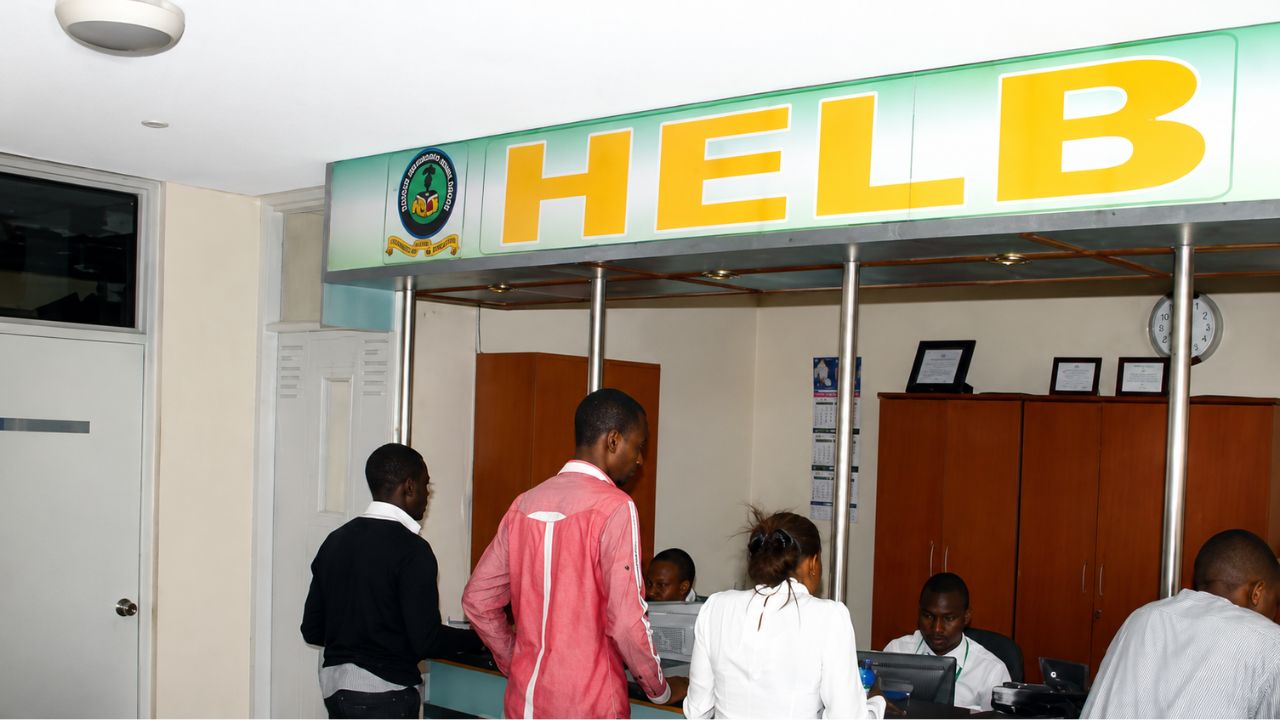
HELB First-Year Funding Delays 2026: What’s Happening Now.
First-year university and TVET students who reported for the September 2026 intake are still waiting on their HELB loans and Universities Fund scholarships, weeks into the term.
On Sunday, September 20, the Elimu Bora Working Group (EBWG) — a coalition of education-focused civil society organisations — publicly demanded that both agencies release funds immediately to students who have already completed registration, and called for interim upkeep support to cover accommodation and academic materials in the meantime.
Here’s what’s actually going on, why it happened, and what affected students and parents should do right now.
The short answer
Funding hasn’t stalled because money doesn’t exist — it’s delayed because Kenya is running two funding systems at once during a legal transition. First-years are being processed under the existing Student-Centred Funding Model (SCFM) while Parliament debates a new law, the Tertiary Education, Placement and Funding Bill, 2026, that would eventually replace HELB and the Universities Fund altogether.
The application window for first-time applicants was extended to September 21, 2026, and HELB says allocations for students who applied by September 3 have already been processed, with upkeep disbursement underway. Not everyone has been paid yet, which is the core of Elimu Bora’s complaint.
What Elimu Bora is demanding
Speaking to journalists in Nairobi, the working group asked government to treat two things as urgent priorities:
- Immediate disbursement to registered students — releasing HELB and Universities Fund allocations to every first-year who has completed registration, rather than students waiting indefinitely for processing to catch up.
- Interim upkeep support — a stop-gap payment to help needy students afford accommodation and basic academic materials while the wider funding questions are sorted out, so that students aren’t forced to skip classes or go without meals in the meantime.
Elimu Bora is not a new voice in this conversation. The coalition has previously pushed government on issues ranging from the rollout of the Competency-Based Curriculum to bursary-kitty allocations and the reinstatement of the Edu-Afya student health cover, and it has occasionally clashed publicly with the National Assembly’s Education Committee over its findings.
Why first-years are caught in the middle
The confusion traces back to a genuine policy contradiction that hasn’t been resolved. President William Ruto has said no student should pay out of pocket for tuition or upkeep from September 2026, tying that pledge at one point to the HELB (Amendment) Bill, 2026 — while the Ministry of Education has consistently pointed to a different piece of legislation, the Tertiary Education, Placement and Funding Bill, 2026, as the vehicle for that promise. Because neither bill has passed, the Ministry directed that this year’s first-years be funded through the current system instead.
Education Cabinet Secretary Julius Ogamba has been explicit about the sequencing: first-years admitted in the September cycle are being funded under the existing Student-Centred Funding Model, and only once the new Bill becomes law will all tertiary students — from first-years through to sixth-years across universities, KMTC, TVETs and Teacher Training Colleges — be transitioned into the new framework together, rather than starting a new cohort under a system that doesn’t yet legally exist.
Higher Education Principal Secretary Beatrice Inyangala has separately urged universities not to let this uncertainty stop the academic year: institutions have been told to continue admitting first-years and to support the most vulnerable students while processing catches up. According to Inyangala, roughly 195,000 of an expected 200,000 government-placed first-years had reported to institutions, with several universities recording reporting rates above 90%.
What’s actually been disbursed so far
Despite the HELB First-Year Funding Delays, students are experiencing, government figures suggest real money has moved this cycle, even if not fast enough for everyone:
| Milestone | Detail |
|---|---|
| Application deadline | Extended from August 31 to September 21, 2026, after 789,422 applications were received by the original cutoff |
| First-semester disbursement (continuing students) | Ksh 22.12 billion already released to continuing university and TVET students |
| First-time applicant allocations | HELB completed allocations for students who applied by September 3, 2026, per a circular to Vice-Chancellors dated September 7 |
| Upkeep disbursement | Confirmed underway as of the September 7 circular, with tuition payments scheduled for later in September |
| 2026/2027 higher education financing (total) | Increased to Ksh 56.7 billion, up from Ksh 41 billion the previous year |
| Universities Fund scholarship allocation | Ksh 30.8 billion for 2026/2027, up from Ksh 18.4 billion — a Ksh 12.4 billion increase |
Read Also: HELB Set to Disappear? Govt Plans Major Shake-Up of University Funding.
At the same time, HELB and the Universities Fund are reportedly facing a combined funding shortfall in the region of Ksh 74 billion (roughly Ksh 57 billion at HELB and Ksh 17 billion at the Universities Fund) for the current cycle, according to Nation Media Group reporting — which helps explain why processing has felt slower on the ground than the topline disbursement figures suggest.
How the current funding model works while you wait
Until the new law takes effect, first-years are assessed under the Student-Centred Funding Model, which places every applicant into one of five financing bands using a Means Testing Instrument that weighs household income, family size, medical expenditure, disability status, and other socioeconomic factors — not just a single income figure.
| Band | Monthly household income | Scholarship | Loan | Government support | Household share |
|---|---|---|---|---|---|
| Band 1 | Up to Ksh 5,995 | 70% | 25% | 95% | 5% |
| Band 2 | Ksh 5,995 – 23,670 | 60% | 30% | 90% | 10% |
| Band 3 | Ksh 23,670 – 70,000 | 50% | 30% | 80% | 20% |
| Band 4 | Ksh 70,000 – 120,000 | 40% | 30% | 70% | 30% |
| Band 5 | Above Ksh 120,000 | 30% | 30% | 60% | 40% |
Students placed in public universities qualify for both a Universities Fund scholarship and a HELB loan; those in private universities can only access the HELB loan. If your band looks wrong for your household’s actual circumstances, HELB allows an appeal through the HEF portal — this is worth doing immediately rather than waiting, since appeals also take processing time.
Read Also: HELB Opens Ksh500,000 Education Loans for Civil Servants
What comes next: the Tertiary Education, Placement and Funding Bill
The Bill now before Parliament is more consequential than a simple funding top-up. It proposes creating a new Tertiary Education Funding Authority (TEFA) to absorb the functions currently split between HELB, the Universities Fund and other financing bodies, and it would replace scholarships with a system in which the government covers 100% of a placed student’s costs — tuition and upkeep — but records the entire amount as a repayable loan rather than a mix of grant and loan.
Under the proposal, KUCCPS placement timelines would also tighten, with the Bill requiring that applications open within 30 days of national assessment results being released.
That loan-only structure has drawn pushback. Kiambu Senator Karungo wa Thang’wa has publicly questioned whether the model adequately protects the neediest students, arguing it risks replacing targeted, non-repayable scholarship support with a system where even the poorest households take on debt.
Published explanations of the Bill indicate loan repayment would begin within a year of completing studies, with employer deductions capped at 25% of income — but the Senator wants clearer statutory guarantees on scholarships and on how repayment is calculated for graduates who haven’t yet found work.
Parliament’s Departmental Committee on Education opened public hearings on this Bill and five related education bills across 31 counties between September 14 and 25, 2026, as part of the constitutional public-participation process.
Kenyans can still submit written memoranda or present views orally before the window closes. Until the Bill is passed and takes effect, the Ministry has confirmed the current funding arrangements — the SCFM bands above — remain in force.
What affected first-years should do right now
- Check your HEF portal status directly. Log in at the Higher Education Financing (HEF) student portal, through the HELB App, or by dialling *642# to see your allocation and disbursement status, rather than relying on rumours or forwarded messages.
- Apply before September 21, 2026, if you haven’t yet. This is the extended deadline for first-time applicants; missing it could delay you into a later processing batch.
- Verify your batch has been released. Disbursement is happening in numbered batches — if your batch hasn’t been paid yet, funds may still be 48 hours or more away once released.
- Appeal a wrong band promptly. If your assessed band doesn’t reflect your household’s real financial situation, raise it through the HEF portal rather than waiting for the general backlog to clear.
- Talk to your institution’s financial aid or dean of students office. Universities have been directed to support vulnerable first-years who are stuck without accommodation or upkeep while national processing catches up — some institutions are extending short-term relief.
- Ignore unofficial disbursement “leaks.” HELB has specifically warned applicants to trust only the official portal, its verified social accounts, and direct portal notifications — not screenshots or WhatsApp forwards claiming to show disbursement dates or amounts.
Read Also: HELB Loan Applications Move to Stage 2 as Verification Begins for First-Time Applicants
Frequently asked questions
Is free university education starting in September 2026?
Not yet, for first-years. The government has proposed it, and the framework is contained in the Tertiary Education, Placement and Funding Bill, 2026, but the Bill has not passed. First-years admitted this September are being funded under the existing Student-Centred Funding Model, with a transition to the new framework promised once the law takes effect.
Why haven’t I received my HELB loan or Universities Fund scholarship yet?
Most delays trace to processing volume — nearly 790,000 applications were submitted by the original deadline, and allocations are being cleared and disbursed in batches. HELB has said allocations for applicants who applied by September 3 are complete and upkeep disbursement is underway, but not every student has been paid at the same time.
What is the Elimu Bora Working Group?
It’s a coalition of civil society organisations focused on Kenyan education policy, active since at least 2023, that has previously engaged Parliament on curriculum implementation, school bursaries and student health cover, among other issues.
Will the new funding model mean everyone repays a loan?
As currently drafted, the Tertiary Education, Placement and Funding Bill proposes covering 100% of a placed student’s tuition and upkeep, but recording the full amount as a repayable loan rather than splitting it between scholarship and loan as the current model does. This detail is still being debated in Parliament and could change before the Bill is passed.
What should I do if I missed the application deadline?
The window has been extended to September 21, 2026. Apply immediately through the HEF portal if you haven’t already — after this date, options for first-time applicants may narrow until the next intake or a specific late-application allowance is announced.
Read Also: HELB Employer Loan Deduction Deadline: What the September 2026 Notice Means
Follow Teachers Updates on Facebook, LinkedIn, X (Twitter), WhatsApp, Telegram, and Instagram. Get in touch with our editors at hello@teachersupdates.news.
