

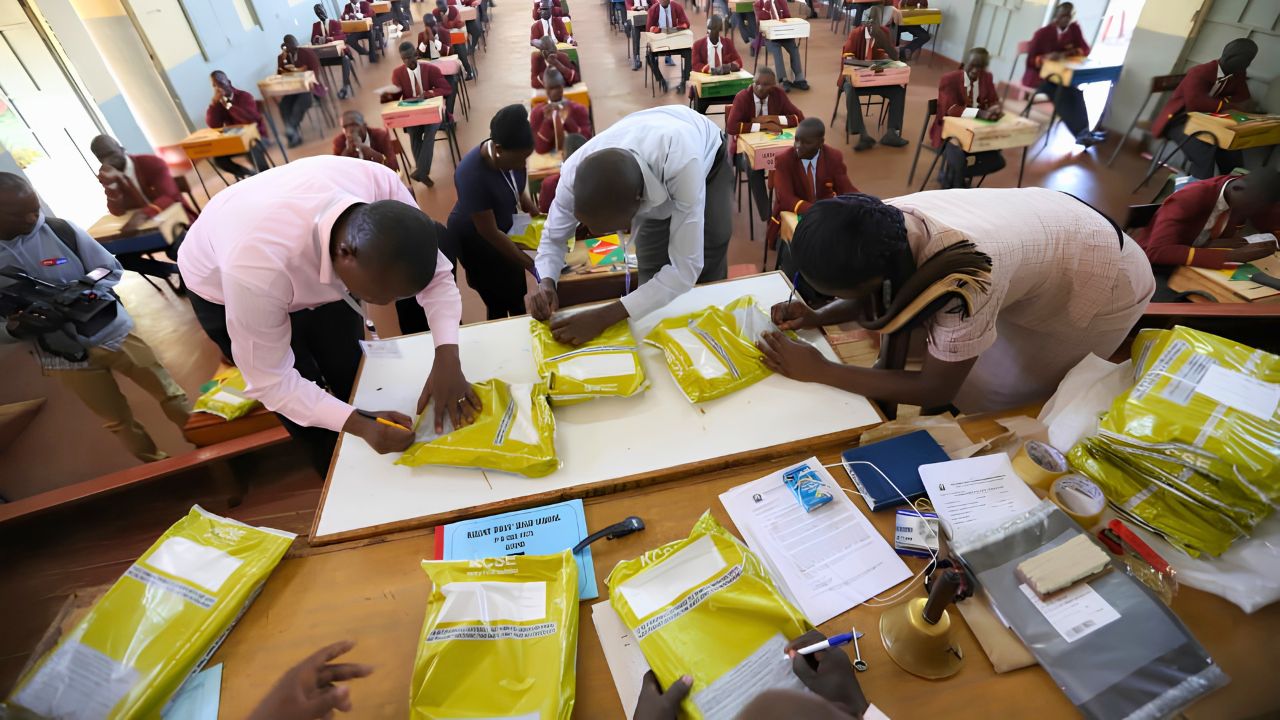
KNEC Denies Fake 230,000 Jobs Notice Circulating Ahead of 2026 Exams.
The Kenya National Examinations Council (KNEC) has dismissed as fake a notice circulating on social media claiming the council is recruiting more than 230,000 professionals to run the 2026 national examinations. In an advisory issued on Monday, September 28, 2026, KNEC said the notice did not originate from the council and urged the public to ignore it.
“Beware of fake news, misleading information and fraudulent advertisements. Do not fall prey to fraudsters,” KNEC said in the statement, which it shared on its verified X account, @KNECKenya.
What the Fake Notice Claimed
The fraudulent notice alleged that KNEC was recruiting over 230,000 people to oversee this year’s Kenya Primary School Education Assessment (KPSEA), Kenya Junior School Education Assessment (KJSEA) and Kenya Certificate of Secondary Education (KCSE). It listed a wide range of roles supposedly up for grabs, including:
- Invigilators
- Supervisors
- Examiners
- Assessors
- Security personnel
- Logistics and security officers
- Support staff
KNEC confirmed there are no such openings listed on its official website and said any legitimate recruitment or examination-related communication is issued only through its verified channels.
Why This Matters: Individuals Cannot Apply Anyway
The core reason this notice is implausible goes beyond the inflated figure. KNEC does not run an open, public application process for exam supervisors and invigilators. Instead, the council works with the Teachers Service Commission (TSC) through a nomination system, meaning individual teachers cannot simply apply for these roles even if a genuine vacancy existed.
Here is how the real process works for 2026:
- CSOs engage schools. From September 4, 2026, Curriculum Support Officers (CSOs) began meeting Heads of Institutions to collect details of teachers who could serve as Center Managers, Supervisors, and Invigilators.
- Sub-County Directors of Education nominate teachers. Rather than individuals applying, Sub-County Directors of Education were directed to nominate suitable teachers for these roles.
- Data goes into KNEC’s CP2 system. Nominated teachers’ details are entered into KNEC’s CP2 online deployment system by the end of September 2026.
- A rotation rule applies. The CP2 system is designed to prevent a teacher from being deployed to a school where they have worked in any of the previous three years, a safeguard meant to reduce familiarity-based exam malpractice.
Because deployment runs through this nomination chain rather than open applications, any notice inviting the general public to apply directly for exam duty roles should be treated as suspect by default.
A Recurring Pattern of Fake KNEC Notices
This is not an isolated incident. KNEC has had to publicly deny several fabricated notices in the past year alone, including:
| Date | Fake Claim | KNEC’s Response |
|---|---|---|
| November 2025 | A banner advertising a mass recruitment drive | Flagged as fake; KNEC’s last genuine vacancy notice (for KCSE oral/practical assessors) had been posted five months earlier |
| April 2026 | A notice, falsely attributed to KNEC CEO David Njeng’ere, blaming payment delays on missing personnel data | Dismissed as fraudulent; Education CS Julius Ogamba separately confirmed examiners would be paid |
| June 2026 | A viral post claiming KNEC planned to recruit non-teachers as invigilators and examiners | Denied; KNEC said all recruitment communication comes only through official channels |
| September 2026 | The 230,000 jobs notice covering KPSEA, KJSEA and KCSE | Flagged fake on September 28, 2026 |
Read Also: TSC Secretary/CEO Job Vacancy 2026: Salary, Requirements and How to Apply
The repetition suggests fraudsters are deliberately timing fake notices to coincide with the run-up to exam season, when public attention on recruitment and exam logistics is highest.
How to Verify Whether a KNEC Notice Is Real
Before responding to, sharing, or paying money in relation to any KNEC-related job advert, take these steps:
- Check the official KNEC website (knec.ac.ke) directly for a matching vacancy listing.
- Cross-check the verified X account, @KNECKenya, which is where KNEC posts genuine announcements and corrections.
- Be suspicious of large, round recruitment numbers appearing suddenly on social media without a corresponding entry on KNEC’s careers or notices page.
- Remember that KNEC does not collect exam-duty applications from the public. Teacher deployment for supervision and invigilation runs through TSC nomination and the CP2 system, not open adverts.
- Never pay money to “secure” an examination-related job. Legitimate government recruitment in Kenya does not require upfront payment.
- Report suspicious notices to KNEC through its official social media pages rather than sharing them further.
2026 National Examination Dates
The fake notice surfaced just weeks before the actual 2026 exam season begins. According to the Ministry of Education’s official academic calendar and KNEC’s published timetables, the key dates are:
| Assessment | Dates |
|---|---|
| KPSEA (Kenya Primary School Education Assessment) | October 26–29, 2026 |
| KILEA (Kenya Intermediate Level Education Assessment) | October 26–30, 2026 |
| KJSEA (Kenya Junior School Education Assessment) | October 26–November 1, 2026 |
| KPLEA (Kenya Pre-Vocational Level Education Assessment) | October 26–November 1, 2026 |
| KCSE (Kenya Certificate of Secondary Education) | October 19–November 20, 2026 |
A note on the KCSE dates: coverage of the exam period varies slightly depending on which phase is being described. KNEC’s published KCSE timetable has rehearsals on October 16, followed by oral and practical papers (French, German, Arabic, Kenyan Sign Language, Music, Home Science) from around October 19.
The main written theory papers then begin on November 2, with the entire KCSE exercise concluding on November 20, 2026. This two-phase structure — practicals and orals first, followed by written papers — has been consistent in recent years and explains why different sources cite slightly different “start” dates for the same exam.
Read Also: KJSEA Grading System 2026: Papers, Points and Pathways
Frequently Asked Questions
Is KNEC really recruiting 230,000 people for the 2026 exams?
No. KNEC has explicitly denied this notice and confirmed there is no such opening on its website.
How does KNEC actually select invigilators and supervisors?
Through TSC and Sub-County Directors of Education, who nominate serving teachers. These nominations are entered into KNEC’s CP2 deployment system; individuals do not apply directly.
Where can I check if a KNEC job notice is genuine?
On KNEC’s official website (knec.ac.ke) and its verified X account, @KNECKenya. If a notice isn’t reflected there, treat it as unverified.
Has KNEC dealt with fake notices before?
Yes. In the past year, KNEC has separately denied a fake mass-recruitment banner, a forged notice about examiner payment delays, and a false claim that it planned to hire non-teachers for exam duty.
When do the 2026 national exams start?
KPSEA, KILEA, KJSEA and KPLEA all begin on October 26, 2026. KCSE begins with oral and practical papers around October 19, 2026, with written theory papers from November 2 through November 20, 2026.
KNEC Denies Fake 230,000 Jobs Notice Circulating Ahead of 2026 Exams.
Follow Teachers Updates on Facebook, LinkedIn, X (Twitter), WhatsApp, Telegram, and Instagram. Get in touch with our editors at hello@teachersupdates.news.
