

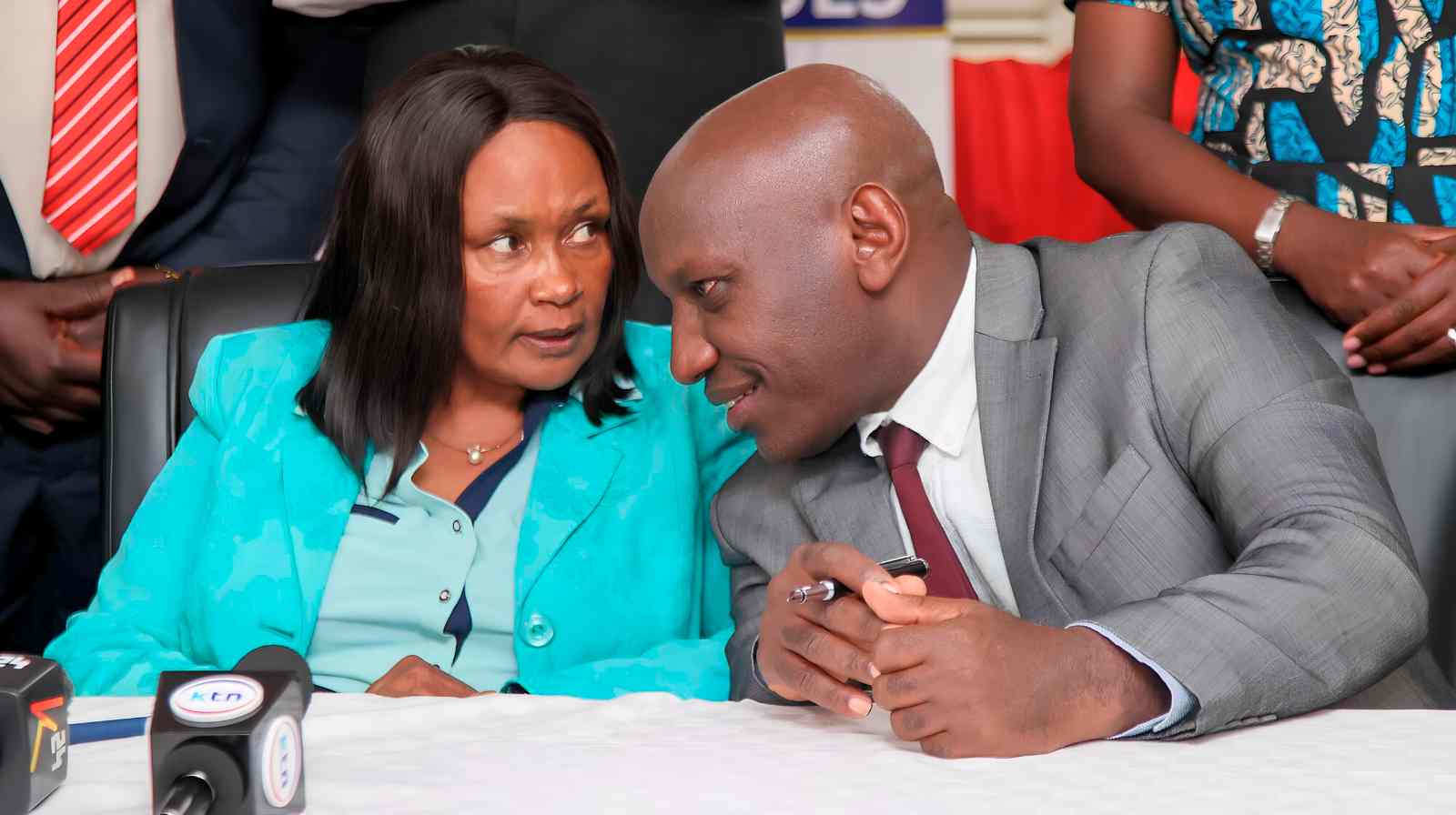
TSC Closes September Payroll as PAYE Relief for Teachers Slips to October 2026.
The Teachers Service Commission closed the September 2026 payroll cycle on September 16, keeping teachers’ salaries and Sacco remittances on their usual schedule. But the bigger story for many teachers isn’t this month’s pay — it’s the tax relief they were hoping would arrive alongside it.
National Treasury has again pushed back the review of Pay As You Earn (PAYE) tax bands, a proposal that would benefit teachers earning below Ksh50,000 a month. Treasury Cabinet Secretary John Mbadi confirmed on September 15 that public participation on the changes will now begin in the first week of October, not September as previously promised.
When Will Teachers Get Their September Salary?
TSC salaries follow a government-wide payroll calendar. Following a directive from the Head of Public Service requiring all state agencies to submit payrolls to the National Treasury by the 20th of each month, TSC has been closing its payroll cycle around the 16th to 18th to allow time for exchequer processing and bank transfers. The September cycle closed on September 16, and teachers should expect salaries and Sacco deductions to reflect in their accounts by that Friday, in line with recent months.
This is a routine administrative process and is not affected by the ongoing PAYE discussions — the tax changes, if and when they take effect, will apply going forward and will not alter salaries already paid.
Why the PAYE Relief Keeps Getting Delayed
The short answer: Treasury has not yet completed the public participation required before it can table the enabling legislation in Parliament.
Mbadi had promised in August that public participation would wrap up by September, clearing the way for the Income Tax (Amendment) Bill II, 2026 to reach Parliament this month. That did not happen. Speaking to journalists on September 15, he cited a packed September schedule — including planned travel — as the reason for the fresh delay.
“It is coming. I will do the public participation first. Kenya has become what it is because of the Constitution that we have. If I bring them without public participation, someone might go to court to stop it. Sometimes it can be very discomforting,” Mbadi told reporters, defending the decision to prioritise procedure over speed.
He laid out a multi-step sequence: begin public participation in the first week of October, pause to attend the IMF and World Bank Annual Meetings scheduled for October 12–18, then return to conclude the exercise before the Bill goes to the National Assembly — which will conduct its own round of public participation before a vote.
That sequencing means the earliest realistic point for parliamentary debate is late October or November, and actual implementation — reflected in a teacher’s payslip — is likely to stretch further still, since the Bill must pass both houses of the legislative process and receive presidential assent before it takes legal effect.
A Pattern of Missed Deadlines
This is not the first time the relief has slipped:
| Stage | What Was Promised | What Happened |
|---|---|---|
| 2026 Finance Bill | PAYE relief to be included | Omitted when the Bill was enacted |
| Presidential directive | Treasury to draft concrete proposals | Directive issued after the Finance Bill omission raised concern |
| August 2026 | Public participation to conclude by September | Not completed |
| September 2026 | Bill to reach Parliament by end of month | Public participation itself pushed to October |
The relief proposal only regained momentum after President William Ruto directed Treasury to develop measures specifically aimed at raising workers’ take-home pay — instructing that earners below Ksh30,000 be exempted from PAYE entirely and that the rate for those below Ksh50,000 be cut. That directive is what produced the current proposal, even though it has since missed its own internal deadlines twice.
What the Proposed PAYE Changes Would Actually Do
Under the plan Treasury has outlined so far:
- Employees earning up to Ksh30,000 a month would be fully exempted from PAYE.
- Employees earning between Ksh30,000 and Ksh50,000 a month would have their PAYE rate reduced to 25 percent, down from the current structure that pushes much of this income into the 30 percent band.
Treasury estimates the change could reduce PAYE deductions for more than 3.4 million salaried workers nationally — a figure that spans government, parastatal and private-sector employees, teachers included.
Read Also: TSC Admits Payroll Error Behind June Salary Cuts
It’s worth being precise about what “reduced to 25 percent” will mean in practice, because the exact mechanics haven’t been published. Kenya currently taxes monthly income through five progressive bands under the Finance Act 2023:
| Monthly Income (KES) | Current PAYE Rate |
|---|---|
| First 24,000 | 10% |
| 24,001 – 32,333 | 25% |
| 32,334 – 500,000 | 30% |
| 500,001 – 800,000 | 32.5% |
| Above 800,000 | 35% |
Every employee also receives a personal relief of Ksh2,400 a month, deducted directly from tax payable. Whether the proposed reform restructures these bands outright or applies a flat 25 percent rate specifically to the 30,000–50,000 bracket will only be clear once the actual Bill text is published following public participation. Readers should treat the “25 percent” figure as a policy target from Treasury’s public statements, not yet a legislated formula.
A Worked Example for the Ksh30,000 Exemption
For a teacher earning a basic salary of Ksh26,225 — the entry point of TSC Grade B5 — current PAYE works out as follows:
- First Ksh24,000 at 10% = Ksh2,400
- Remaining Ksh2,225 at 25% = Ksh556
- Gross tax = Ksh2,956, less Ksh2,400 personal relief = about Ksh556 in monthly PAYE today
Under full exemption, that teacher would pay no PAYE at all — a modest but real gain of roughly Ksh6,700 a year, before accounting for NSSF, SHIF and the Housing Levy, which are separate statutory deductions unaffected by this proposal.
Which Teachers Fall Into the Affected Brackets
TSC implemented Phase Two of the 2025–2029 Collective Bargaining Agreement effective July 1, 2026, revising basic salaries across all job grades. The three lowest teaching grades sit squarely within the income range the PAYE proposal targets:
| TSC Grade | T-Scale | Designation | Basic Salary Range (July 2026) |
|---|---|---|---|
| B5 | 5 | Primary Teacher II | Ksh26,225 – Ksh33,444 |
| C1 | 6 | Secondary Teacher III / Primary Teacher I | Ksh32,423 – Ksh41,072 |
| C2 | 7 | Secondary Teacher II | Ksh41,100 – Ksh50,287 |
Read Also: TSC payroll check-off rules: Union Dues, T-Pay & 1/3 Rule
A Grade B5 teacher near the bottom of the scale would qualify for full exemption; those higher up the B5 scale, and essentially all of Grade C1 and most of Grade C2, would fall into the proposed 25 percent bracket. Only the very top of the C2 scale edges slightly past the Ksh50,000 threshold and would remain under the standard rate.
Taken together, these three grades represent a substantial share of Kenya’s teaching workforce — meaning the relief, if it materialises, would touch a meaningful proportion of classroom teachers rather than a narrow slice of civil servants.
Why This Matters Beyond the Payslip
Cost of living. Food and fuel prices have kept household budgets tight across the country. For teachers in the lower job grades, an extra few hundred to low-thousands of shillings a month — without any change to gross pay — is a direct, if modest, cushion against those pressures.
Borrowing power. Banks and teacher Saccos calculate lending limits against verified net income. A higher take-home pay, even a modest increase, can raise how much a teacher qualifies to borrow — relevant for teachers financing school fees, home improvements or emergencies through Sacco or bank facilities.
Financial planning. More disposable income, however small, gives teachers slightly more room to save or manage existing obligations, particularly in a year that has already seen salary adjustments tied to the CBA rollout alongside continuing NSSF, SHIF and Housing Levy deductions.
What Teachers Should Do Now
- Don’t expect a change in your October payslip. Public participation hasn’t started yet; even an optimistic timeline puts actual implementation well past October.
- Watch for the official public participation notice from Treasury in the first week of October — this is the stage where the actual Bill language, and therefore the precise computation method, will become clear.
- Treat the 25 percent figure as provisional until the Income Tax (Amendment) Bill II, 2026 is published in full.
- Continue budgeting on current net pay. Sacco and bank commitments should be planned against your existing take-home, not anticipated relief that hasn’t been legislated.
Read Also: Dr. Samwel Marigat Named New TSC Director of Staffing
Frequently Asked Questions
Has the September 2026 TSC payroll been affected by the PAYE delay?
No. The payroll closed on schedule on September 16, and salaries are expected in teachers’ accounts by that Friday, following TSC’s standard monthly cycle.
When will teachers actually see reduced PAYE deductions?
Not before public participation concludes, the Bill passes through Parliament with its own participation round, and it receives presidential assent. Given the October start date for public participation, implementation is unlikely before late 2026 at the earliest.
Do all teachers in Grades B5, C1 and C2 qualify for the relief?
Most do, based on current salary scales, but a small number at the very top of Grade C2 exceed the proposed Ksh50,000 ceiling and would remain outside the reduced bracket.
Is the Ksh30,000 exemption confirmed law?
No. It remains a Treasury proposal awaiting public participation and parliamentary approval. It has not yet been enacted.
TSC Closes September Payroll as PAYE Relief for Teachers Slips to October 2026.
Follow Teachers Updates on Facebook, LinkedIn, X (Twitter), WhatsApp, Telegram, and Instagram. Get in touch with our editors at hello@teachersupdates.news.
