

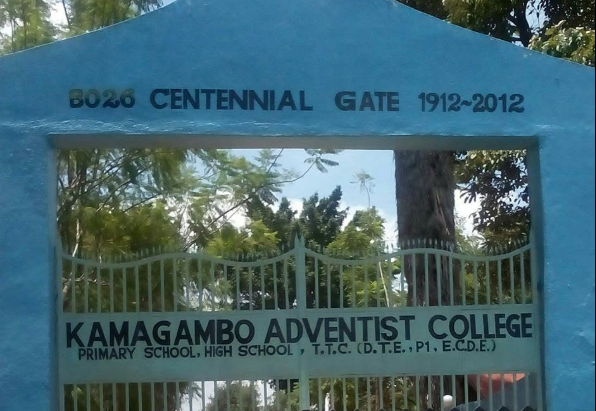
Kamagambo University is now Kenya’s newest degree-awarding institution. President William Ruto issued the Migori County institution a Letter of Interim Authority (LIA) on Tuesday, September 15, 2026, during a function at the Kisumu State Lodge, taking the number of universities authorised to operate in Kenya to 90.
The letter converts Kamagambo Adventist Teachers’ College, a century-old Seventh-day Adventist institution, into an autonomous university. It does not yet make Kamagambo a fully chartered university, and that distinction matters for anyone considering applying there. Here is what actually changed, what it means for prospective students, and what still has to happen before Kamagambo becomes a chartered university.
What Happened, in Brief
- Date: Tuesday, September 15, 2026
- Venue: Kisumu State Lodge, during President Ruto’s development tour of the Nyanza region
- What was granted: A Letter of Interim Authority (LIA) from the Commission for University Education (CUE), via the Cabinet Secretary for Education
- Previous status: Kamagambo Adventist Teachers’ College
- New name: Kamagambo University
- Programmes approved so far: Three degree programmes
- National count: The 90th institution authorised to operate as a university in Kenya, according to the President and Education Cabinet Secretary Julius Ogamba
A Letter of Interim Authority Is Not a Full Charter
This is the single most important thing for prospective students, parents and staff to understand, and it is where many news reports on new universities leave readers guessing.
Under the Universities Act, 2012, every institution in Kenya must hold one of two instruments of accreditation to legally call itself a university and award degrees:
- Letter of Interim Authority (LIA) — permission to operate as a university on a provisional basis, while working toward full accreditation.
- Charter — full, permanent accreditation as a university.
Kamagambo has just received the first of these, not the second.
How the Two Compare
| Feature | Letter of Interim Authority (LIA) | Full Charter |
|---|---|---|
| Legal status | Provisional; university operates under CUE supervision | Full body corporate status |
| Duration | Up to 4 years, renewable once for a further 4 years (maximum 8 years total) | Permanent, subject to periodic review |
| Number of degree programmes | Minimum of two; institution may submit no more than three for initial approval | Requires facilities for at least four academic programmes |
| Minimum enrolment | No fixed minimum at this stage | At least 400 students enrolled in degree programmes |
| Governance | Institution establishes governing organs (council, senate, etc.) during this period | Fully established governance structures required |
| New programmes | Each new programme needs CUE approval | Council may develop and approve new programmes, subject to CUE notification |
| CUE oversight | Annual inspections to check compliance and progress | Periodic accreditation reviews |
| What happens at the end | CUE prepares an accreditation report at least six months before expiry; the Cabinet Secretary may grant a Charter, extend the LIA once, or reject the application | N/A |
Read Also: KNEC Item Writing Training 2026: How Senior School and Vocational Teachers Can Apply
In practical terms, Kamagambo now has legal permission to run as a university, admit students to a limited set of programmes, hire staff and build out its governance structures. It must demonstrate, typically over at least three years of operation, that it meets CUE’s standards on staffing, facilities, library resources, governance and academic quality before it can apply for a full Charter. If it fails to make sufficient progress, CUE can recommend that the Cabinet Secretary revoke the LIA rather than upgrade it.
President Ruto underscored this himself at the ceremony: “The word ‘interim’ matters. Kamagambo has crossed the threshold, but it has not reached its destination. The confidence expressed today must now be earned every day through academic integrity, sound governance, prudent stewardship and uncompromising quality.”
The Three Degree Programmes Kamagambo Can Now Offer
With CUE’s approval, Kamagambo University can admit students to three initial degree programmes:
- Bachelor of Education in Arts
- Bachelor of Arts in Theology with Entrepreneurship
- Bachelor of Business Administration with Entrepreneurship
Two of the three programmes are built around entrepreneurship, reflecting a deliberate push by both the university and the government toward graduates who can create jobs and businesses rather than only seek employment. Ruto specifically challenged Kamagambo to ensure students in these programmes get real practical exposure, not just classroom theory.
There is no public indication yet of intake dates, fee structures, or minimum KCSE grade requirements for these programmes. Prospective applicants should watch Kamagambo University’s official channels and the Kenya Universities and Colleges Central Placement Service (KUCCPS) portal for updates, since neither typically publishes admission details for a newly authorised institution on the same day the LIA is issued.
Read Also: TSC Promotion 2026: Acting Administrators in Hardship Counties Get Priority
From Mission School to University: Kamagambo’s 114-Year History
Kamagambo’s roots go back further than most new Kenyan universities. Pioneer Seventh-day Adventist missionary Arthur A. Carscallen established a mission station and school at Kamagambo, near present-day Kisii, in 1912, on land donated by a local chief. Missionary Ernest Warland reorganised and expanded the school through the 1920s, and in 1928 the colonial government formally licensed it to train teachers, making Kamagambo one of the oldest continuously operating teacher-training institutions in Kenya.
By 1971, Kamagambo Teachers Training College had become the first Adventist post-secondary college in Kenya, and it went on to produce generations of teachers who staffed schools across South Nyanza and beyond. That teacher-training identity is exactly what Ruto referenced when he told the institution: “Its history gives it a foundation, while its performance will determine its future.”
The LIA now allows Kamagambo to build on that legacy by moving beyond teacher training into broader university education, starting with the three programmes above.
Kenya’s Third Adventist-Run University
Kamagambo becomes the third private university in Kenya operated by the Seventh-day Adventist Church, joining:
| University | County | Status |
|---|---|---|
| University of Eastern Africa, Baraton | Nandi County | Fully chartered (chartered in 1991) |
| Adventist University of Africa | Kajiado County (Ongata Rongai) | Fully chartered; postgraduate-only institution offering theology, leadership, business and public health degrees |
| Kamagambo University | Migori County | Letter of Interim Authority (2026) |
The Kamagambo Adventist College Board chairman, Dr Samuel Misiani, pledged that the new university would work to meet the standards expected of Adventist universities worldwide as it pursues a full Charter.
Read Also: KCBE Pilot 2027: What’s Confirmed So Far as Grade 10 Moves to Grade 11
What Government Officials Said
President William Ruto framed the milestone around the balance between access and quality: “Access without quality disappoints the student and quality without relevance disappoints the nation.” He argued that universities should ultimately be judged by the competence of their graduates, the value of their research, and the practical solutions they generate for national challenges such as agriculture, healthcare, affordable housing, the digital economy and renewable energy.
Education Cabinet Secretary Julius Ogamba confirmed that the LIA made Kamagambo Kenya’s 90th authorised university and urged the institution to strengthen staffing, facilities and academic systems before expanding student numbers: “Access without quality is a disservice. I urge Kamagambo, therefore, to build capacity, to build staff, facilities, and standards before expanding enrollment.”
CUE Chairman Prof James Onyango stressed that the Commission’s role continues after the LIA is issued, through ongoing monitoring as Kamagambo works toward a Charter, and urged the university to treat quality as part of its institutional culture rather than something imposed by the regulator.
What This Means for Prospective Students and Parents
If you or your child are considering Kamagambo University once it opens admissions, keep the following in mind:
- KUCCPS placement and HELB funding typically lag behind an LIA announcement. Newly authorised private universities are usually added to the KUCCPS institutional list and the HELB/government-funding eligibility list only after the placement body updates its records, which can take time. Confirm Kamagambo’s placement and funding status directly with KUCCPS (students.kuccps.net) and the Higher Education Funding Application Portal (hef.co.ke) before assuming eligibility.
- Private university students generally qualify for HELB loans, not government scholarships, under the current student-funding framework, once an institution appears on the approved list. Government scholarships have so far been reserved for public universities and the Open University of Kenya.
- Only the three named programmes are currently approved. If Kamagambo advertises other degree courses before CUE approves them, that should be treated as premature and worth confirming with CUE directly.
- A funding overhaul is under parliamentary debate. The government has proposed the Tertiary Education Placement and Funding Bill, 2026, which would merge HELB, the Universities Fund and the TVET Fund Board into a single Tertiary Education Funding Authority and move toward funding every placed student regardless of background. As of mid-September 2026, the Bill remains before Parliament and its final form, and how it would apply to newer private universities, is not yet settled.
Read Also: Curriculum Based Establishment and CBE Timetabling Guidelines Explained
Kenya’s Higher Education Landscape by the Numbers
Kamagambo’s admission takes the count of institutions authorised to operate as universities in Kenya to 90, according to figures cited by President Ruto and confirmed by CS Ogamba at the event. This figure includes public universities, chartered private universities, private universities and colleges still under Letters of Interim Authority, and specialised degree-awarding public institutions.
Kenya’s public university system traces back to 1970, when the University of Nairobi became the country’s first fully-fledged national university. Since then, the sector has expanded through successive waves of chartering public colleges into universities and licensing private institutions, many of them faith-based, like Kamagambo.
President Ruto also cited figures suggesting rapid growth in graduate output nationally, referencing an increase in the number of students completing degree programmes in recent years. Because these particular figures were cited verbally at the event rather than published in a CUE report available for independent verification at the time of writing, readers wanting exact, sourced enrolment and graduation statistics should consult CUE’s official reports directly at cue.or.ke.
The Bigger Policy Message: Access Versus Quality
Beyond the Kamagambo announcement itself, Ruto used the event to press a recurring theme in his administration’s education policy: that simply adding more universities is not enough. He called for closer cooperation between universities, industry and government, with employers helping shape curricula and universities exposing students to real workplace problems.
He also linked university output to Kenya’s stated economic priorities, including agriculture, health, housing, the digital economy and renewable energy, arguing that “a country that continually imports knowledge will continually import solutions.”
For a rural, teacher-training-rooted institution like Kamagambo, that translates into a specific challenge: proving, within the four-to-eight-year window an LIA allows, that it can produce graduates who go beyond passing exams to starting businesses, solving local problems and meeting the staffing and infrastructure benchmarks CUE requires for a full Charter.
Read Also: TSC Wealth Declaration: What Kenyan Teachers Need to Know
Frequently Asked Questions
Is Kamagambo University fully accredited? Not yet. It holds a Letter of Interim Authority, a provisional status under the Universities Act, 2012. It must meet CUE’s requirements, generally over at least three years of operation, before it can apply for a full Charter.
What courses can I study at Kamagambo University right now? Three programmes have been approved: Bachelor of Education in Arts, Bachelor of Arts in Theology with Entrepreneurship, and Bachelor of Business Administration with Entrepreneurship.
Where is Kamagambo University located? In Migori County, near Kisii in the South Nyanza region, on the site of the historic Kamagambo Adventist mission established in 1912.
Who runs Kamagambo University? It is owned and operated by the Seventh-day Adventist Church, under the Kamagambo Adventist College Board, chaired by Dr Samuel Misiani.
Can I get a HELB loan or government scholarship to study at Kamagambo? That depends on whether KUCCPS and HELB have added Kamagambo to their approved institutional lists, which typically happens after the LIA is issued, not simultaneously. Check students.kuccps.net and hef.co.ke directly before applying.
How long can a university operate under a Letter of Interim Authority? Up to four years initially, with one possible four-year extension, for a maximum of eight years, after which CUE must recommend either a full Charter or revocation.
How many universities does Kenya now have? 90, according to figures presented by President Ruto and Education CS Julius Ogamba at the September 15, 2026 event, spanning public universities, chartered private universities, and institutions operating under Letters of Interim Authority.
Follow Teachers Updates on Facebook, LinkedIn, X (Twitter), WhatsApp, Telegram, and Instagram. Get in touch with our editors at hello@teachersupdates.news.
