

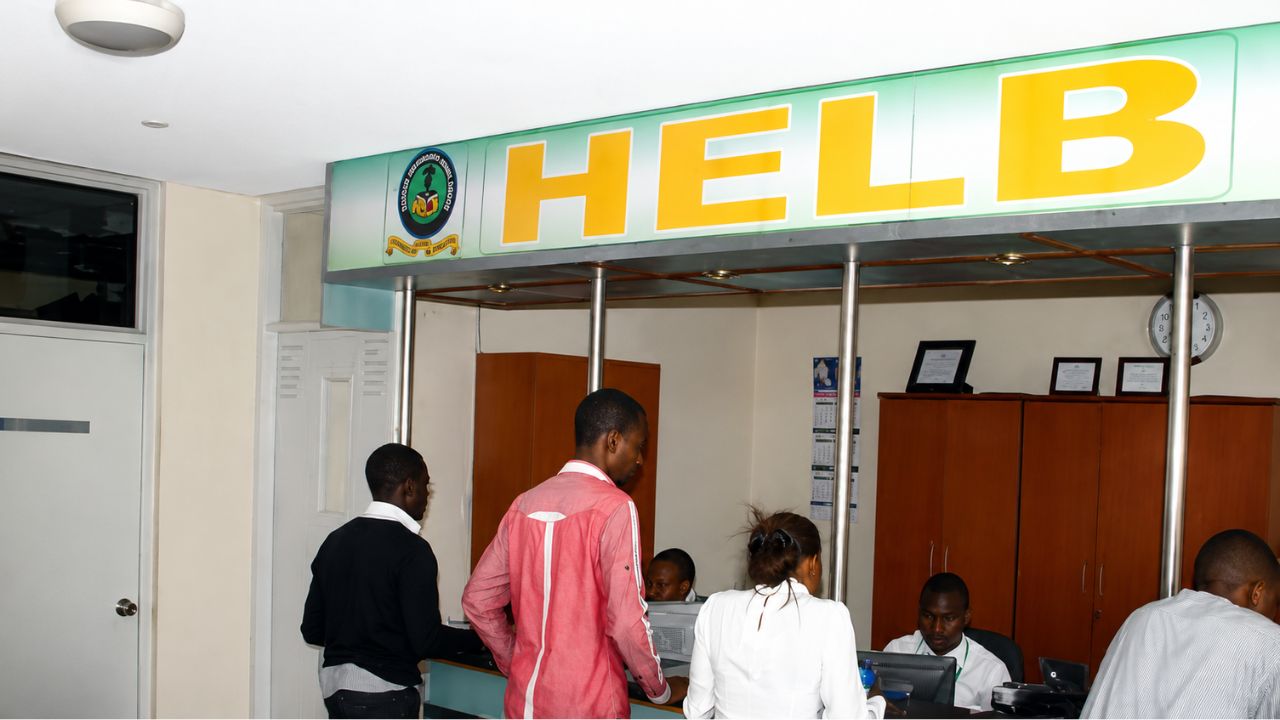
HELB Set to Disappear? Govt Plans Major Shake-Up of University Funding.
The Government of Kenya, through the Chairperson of the President’s Council of Economic Advisers (CEA), David Ndii, has announced that funding for public universities will be removed from the national budget from October 2026 and transferred to a market-based financing model.
The announcement was made during an economic forum in which Ndii outlined the fiscal framework underpinning the proposed restructuring of tertiary education financing in Kenya.
The move forms part of a broader set of reforms proposed under the Tertiary Education Placement and Funding Bill, 2026, currently before Parliament, which seeks to consolidate the Higher Education Loans Board (HELB), the Universities Fund Board (UFB) and the Technical and Vocational Education and Training Funding Board (TVETFB) into a single institution, the Tertiary Education Funding Authority (TEFA).
Explanation of the Market-Based Funding Model
Ndii stated that the government intends to capitalise a dedicated fund over an extended period, after which the fund would be expected to raise additional capital directly from financial markets rather than depend solely on annual Treasury allocations.
“We are going to take university funding out completely from October we are taking that out completely of the budget into a sort of market funding model where the government just capitalises the fund over a long period but the fund actually raises money from the market,” Ndii stated.
Under this arrangement, the state would provide initial capital to establish the fund, after which the fund would be structured to source supplementary financing from investors and capital market instruments. This would effectively remove university funding from Kenya’s annual fiscal budget and place it within a separate, market-oriented financing structure administered outside the conventional Treasury disbursement process.
Ndii noted that the new authority would administer scholarships, maintain comprehensive tertiary education funding data and recover loans from beneficiaries, with the objective of leveraging integrated data systems to track graduates into both the formal and informal sectors in order to improve loan recovery mechanisms.
Fiscal Context Behind the Reform
According to figures presented by Ndii, Kenya’s higher education financing needs are projected to rise sharply over the next five years. Higher education enrolment is projected to rise from about 1.2 million students in the 2026/2027 academic year to nearly 2.5 million by the 2030/2031 academic year, while funding requirements over the same period are projected to increase from KSh176.4 billion to KSh450 billion, even as the budget allocation remains at approximately KSh96.8 billion.
This trajectory would widen the funding gap from approximately KSh80 billion to approximately KSh350 billion within five years.
University enrolment specifically is projected to rise from 616,500 students to more than 1.37 million students over the same period, with the balance of enrolment growth attributed to TVET institutions. Ndii, addressing the projected shortfall on the social media platform X on 6 August 2026, stated: “Either we reduce numbers, underfund massively, or finance differently,” and invited proposals from the public on alternative financing mechanisms.
Separately, HELB has reported a funding requirement of KSh112.1 billion for the 2026/2027 financial year, against a disbursed allocation of KSh56.3 billion. Education Cabinet Secretary Julius Ogamba informed a Senate committee on 23 July 2026 that 23 public tertiary institutions were close to insolvency.
Public universities have also accumulated an estimated KSh100 billion in debt as of mid-2026, with a reported university dropout rate of 19.6 percent recorded between 2024 and 2026, attributed to unaffordability under the previous funding model.
Ndii further stated that the government spent approximately KSh600 billion on education in the preceding financial year, with households contributing an additional KSh300 billion. In the 2026/2027 national budget, the education sector remained the largest single beneficiary of public expenditure, receiving an allocation of KSh781.4 billion.
Background: Transition From the Variable Scholarship and Loan Funding Model
The current university funding framework, introduced in 2023 and known as the Variable Scholarship and Loan Funding model, combines government scholarships, student loans and household contributions, with the level of government support determined through a means-testing system that classifies students into funding bands.
President William Ruto stated that this model failed to adequately support students and higher learning institutions: “We tried the differentiated model. I think the Vice-Chancellors here know it didn’t work because it made most of our universities almost close down. After all, while we promised 80 per cent funding, we went down to 40 per cent,” Ruto said.
On 21 July 2026, President Ruto announced that the government would provide full funding, covering tuition and upkeep, for all students admitted to public universities, colleges and Kenya Medical Training College (KMTC) institutions from September 2026, with repayment required once graduates secure employment.
Ndii subsequently clarified that the President’s announcement referred to students being fully funded, without specifying the precise source of the funding, a distinction that has been the subject of continuing public discussion.
Under the proposed model, financing would shift toward a loan-based structure. Speaking during a session of the National Assembly’s Departmental Committee on Education on 5 August 2026, representatives of the Ministry of Education confirmed that the new framework would extend education loans to minors admitted to tertiary institutions, and that ongoing students already enrolled under the existing funding structure would continue to be supported under that structure.
HELB Chief Executive Officer Geoffrey Monari stated that the new model would incorporate a bond system raised through the capital markets, alongside a savings scheme through which parents could save funds for their children’s university education: “We will have a bond system which will be raised through the capital markets. We will have a savings scheme where the parents can save funds for their students when they go to the university,” Monari said.
HELB has separately clarified that the interest rate applicable to undergraduate, TVET and KMTC loans remains unchanged at 4 percent per annum, and advised students and parents to rely on official communication regarding any future adjustments to loan terms.
The Tertiary Education Placement and Funding Bill, 2026
The Tertiary Education Placement and Funding Bill, 2026 is sponsored by National Assembly Majority Leader Kimani Ichung’wah and is currently before Parliament. Principal Secretary for the State Department for Higher Education, Dr Beatrice Inyangala, informed the National Assembly’s Departmental Committee on Education that the Bill proposes a comprehensive legal framework for student placement and funding, and confirmed that it proposes the merger of HELB, the UFB and the TVETFB into TEFA, which would oversee higher education funding, scholarships and student loans.
The Bill proposes that TEFA be granted a broader range of financing instruments than those currently available to HELB, the Universities Fund and the TVET Fund. These instruments include:
- Treasury bills
- Treasury bonds
- Concessional loans
- Government grants
- Savings schemes
- Unit trusts
- Commercial partnerships
Under the proposed framework, TEFA would take over the following functions currently distributed across separate agencies:
- Student financing, previously administered by HELB
- Loan issuance and recovery from graduates upon entry into the workforce, previously administered by HELB
- University funding, previously administered by the Universities Fund Board
- TVET institution funding, previously administered by the TVET Funding Board
- Maintenance of a centralised database of tertiary education funding beneficiaries
- Coordination of merit-based and choice-driven placement of qualified candidates into public universities, TVET institutions and colleges, with placement delinked from immediate financial awards
The Bill further proposes that the Placement Service operate independently of immediate financial award decisions, so that access to tertiary institutions is determined on the basis of merit and qualifications, with funding allocated separately. The proposed legislation also introduces provisions allowing minors admitted to tertiary institutions to access education loans, together with defined procedures for loan applications by minors.
Education Cabinet Secretary Julius Ogamba has stated that the government is seeking a single funding authority alongside a centralised database of beneficiaries to reduce duplication across the current fragmented system.
Although the Bill proposes the dissolution of HELB, the Universities Fund and the TVET Fund, none of the three agencies has been abolished at this stage, as the Bill requires parliamentary consideration and passage before it can take legal effect.
Proposed Merger
The following institutions are directly named in the proposed consolidation under the Tertiary Education Placement and Funding Bill, 2026:
- Higher Education Loans Board (HELB)
- Universities Fund Board (UFB)
- TVET Funding Board (TVETFB)
- Tertiary Education Funding Authority (TEFA) — the proposed successor institution.
Read Also: 10 to 15-Year Wait for Teacher Jobs Highlights Kenya’s Employment Crisis
Conclusion
The Tertiary Education Placement and Funding Bill, 2026 remains before Parliament, with the national government seeking its passage ahead of the planned rollout of the new university funding framework, which is scheduled to begin in September 2026, alongside the removal of university funding from the national budget from October 2026.
The proposed reforms encompass the consolidation of HELB, the Universities Fund Board and the TVET Funding Board into the Tertiary Education Funding Authority, the introduction of a market-based capitalisation model for university financing, and a transition from the Variable Scholarship and Loan Funding model to a universal, loan-based funding framework for students admitted to public universities, colleges and TVET institutions.
HELB Set to Disappear? Govt Plans Major Shake-Up of University Funding.
Follow Teachers Updates on Facebook, LinkedIn, X (Twitter), WhatsApp, Telegram, and Instagram. Get in touch with our editors at hello@teachersupdates.news.
